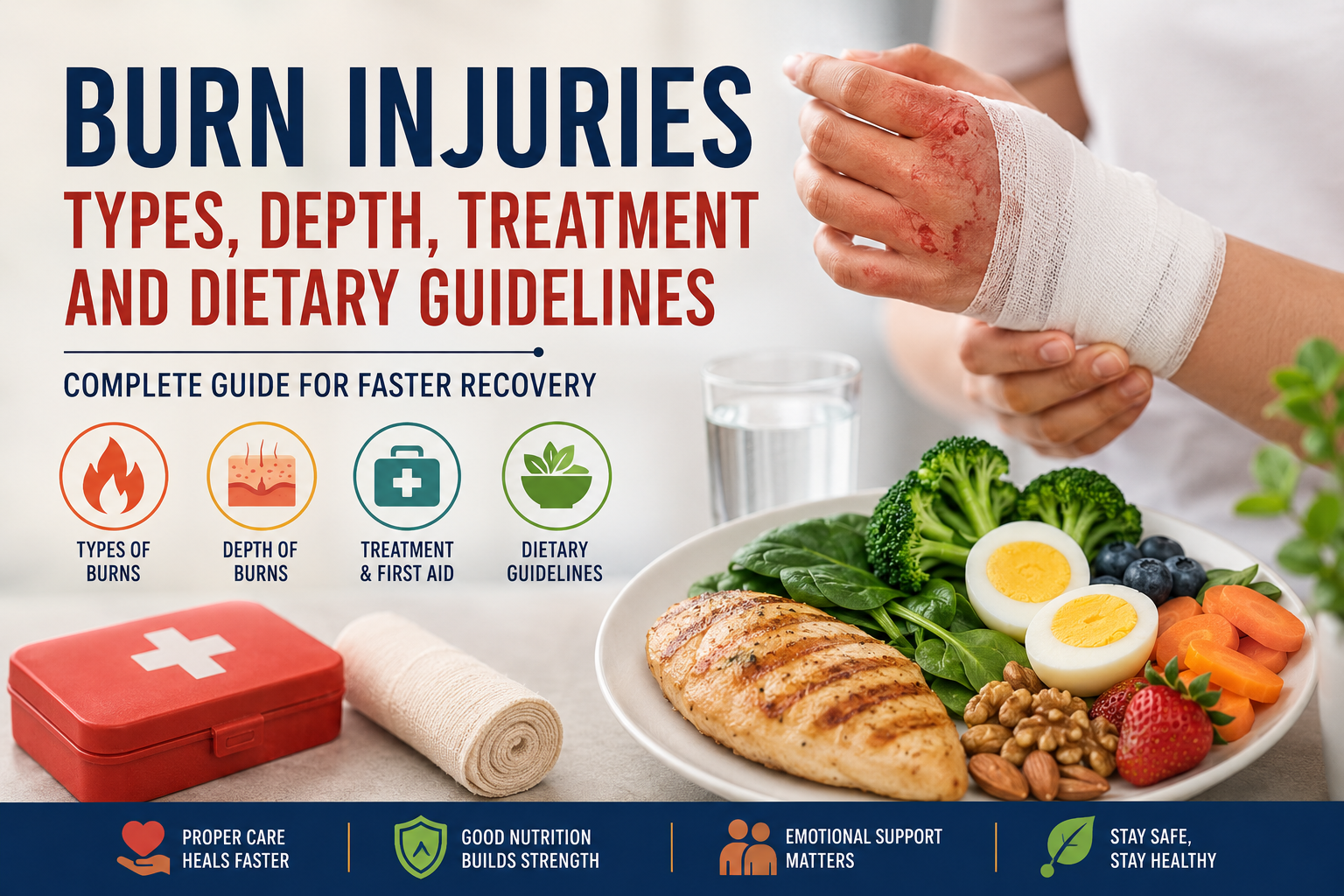
A burn injury is more than just damage to the skin. It brings pain, fear, emotional stress, and a long healing journey. Whether it happens from hot water, fire, chemicals, electricity, or even sunlight, burns can affect a person physically and mentally.
Many people ignore small burns at home, while severe burns can become life-threatening if not treated properly. Understanding the types of burns, their depth, and proper nutrition during recovery can help save lives and speed up healing.
In this article, we will understand burns in simple language, their causes, types, treatment, and the dietary guidelines that help the body recover faster.
What Is a Burn Injury?
A burn is damage to the skin or deeper tissues caused by heat, chemicals, electricity, radiation, or friction. The skin is the body’s protective barrier. When it gets damaged, the risk of infection, dehydration, and severe pain increases.
Burn injuries are common in:
- Home kitchens
- Factories
- Fire accidents
- Electrical work
- Chemical industries
- Road accidents
Children and workers are especially at higher risk.
Common Causes of Burns
Burns can happen in many ways:
1. Thermal Burns
These are caused by heat sources like:
- Fire
- Hot oil
- Steam
- Boiling water
- Hot metal
This is the most common type of burn.
2. Chemical Burns
Strong acids or chemicals can damage the skin deeply. These burns are dangerous because damage may continue even after contact.
Common chemicals include:
- Cleaning acids
- Industrial chemicals
- Bleach
- Battery acid
3. Electrical Burns
Electric current passing through the body can burn tissues internally. Sometimes the outside injury looks small, but internal damage may be severe.
4. Radiation Burns
These burns happen due to:
- Sunburn
- X-rays
- Radiation exposure
5. Friction Burns
These happen when skin rubs hard against a surface, such as:
- Road accidents
- Rope burns
- Sports injuries
Types of Burns Based on Depth
Doctors classify burns according to how deeply the skin is damaged.
First Degree Burns (Superficial Burns)
These burns affect only the outer layer of skin.
Symptoms
- Redness
- Mild swelling
- Pain
- Dry skin
Example:
A mild sunburn or touching a hot object briefly.
Healing Time
Usually heals within 5-7 days without scars.
Treatment
- Cool water
- Moisturizer
- Aloe vera gel
- Pain relief medicine if needed
Though minor, even small burns can cause discomfort and stress.
Second Degree Burns (Partial Thickness Burns)
These burns damage deeper layers of the skin.
Symptoms
- Blisters
- Severe pain
- Swelling
- Red or pink skin
- Wet appearance
Healing Time
Can take 2-3 weeks or more.
Risks
- Infection
- Scarring
- Skin sensitivity
Treatment
- Medical dressing
- Antibiotic cream
- Pain management
- Proper wound care
These burns are painful because nerve endings remain exposed.
Third-Degree Burns (Full Thickness Burns)
These are very serious burns that destroy all skin layers.
Symptoms
- White, black, or charred skin
- Dry or leathery appearance
- Sometimes painless due to nerve destruction
Risks
- Severe infection
- Shock
- Dehydration
- Organ damage
Treatment
- Emergency medical care
- Skin grafting
- Surgery
- Long hospital stay
Third-degree burns can emotionally affect a person for life. Recovery is not only physical but also mental.
Fourth Degree Burns
These are the most severe burns.
The damage reaches:
- Muscles
- Tendons
- Bones
These burns are life-threatening and need immediate emergency treatment.
First Aid for Burns
Quick first aid can reduce damage and pain.
What To Do
For Minor Burns
- Run cool water for 10–20 minutes
- Remove tight items like rings
- Cover with a clean cloth
- Keep the area clean
What NOT To Do
- Do not apply ice directly
- Do not burst blisters
- Do not use toothpaste or butter
- Avoid dirty cloths
Seek Medical Help If:
- Burn is large
- Face or private area is affected
- Chemical/electrical burn occurs
- Signs of infection appear
- Breathing difficulty develops
Emotional Impact of Burn Injuries
Burn injuries do not only damage the body. They often leave emotional scars too.
Patients may experience:
- Anxiety
- Fear
- Depression
- Low confidence
- Social isolation
Children may become emotionally sensitive after severe burns. Adults may struggle with scars and trauma.
Family support and mental care are equally important during recovery.
Why Nutrition Matters in Burn Recovery
After a burn injury, the body works very hard to repair damaged tissues. This increases the body’s energy and protein needs.
A burn patient may lose:
- Fluids
- Protein
- Vitamins
- Minerals
Without proper nutrition, healing becomes slow and infection risk increases.
Good food becomes part of the treatment.
Dietary Guidelines for Burn Patients
Increase Protein Intake
Protein helps rebuild damaged tissues.
Best Protein Sources
- Eggs
- Milk
- Paneer
- Fish
- Chicken
- Lentils
- Soybeans
- Nuts
Protein is one of the most important nutrients during burn healing.
Eat More Calories
Burn patients need extra energy because the body enters a high metabolic state.
Healthy Calorie Sources
- Rice
- Whole grains
- Potatoes
- Bananas
- Peanut butter
- Healthy oils
Skipping meals can slow recovery.
3. Drink Plenty of Fluids
Burn injuries may cause dehydration.
Good Fluids
- Water
- Coconut water
- ORS
- Fresh juices
- Soups
Proper hydration helps maintain blood circulation and skin healing.
4. Vitamin C for Skin Repair
Vitamin C supports collagen production and immunity.
Sources
- Oranges
- Lemon
- Guava
- Amla
- Tomatoes
5.Zinc Helps Wound Healing
Zinc supports tissue repair.
Zinc-Rich Foods
- Pumpkin seeds
- Nuts
- Meat
- Beans
- Dairy products
6. Avoid Junk and Sugary Foods
Processed foods may increase inflammation and slow healing.
Avoid:
- Soft drinks
- Chips
- Excess sugar
- Fast food
The Long-Term Burn Care
Even after wounds heal, skin remains sensitive.
Important Tips
- Use sunscreen
- Keep skin moisturized
- Avoid scratching scars
- Follow doctor’s advice
- Continue healthy nutrition
Some patients may need physiotherapy and counseling for complete recovery.
Preventing Burn Injuries
Many burns can be prevented through awareness.
Safety Tips
- Keep children away from hot liquids
- Wear safety equipment at workplaces
- Handle chemicals carefully
- Check electrical wiring regularly
- Never leave cooking unattended
Small safety habits can prevent lifelong pain.
Conclusion
Burn injuries are painful and sometimes life changing. From minor kitchen burns to severe industrial accidents, every burn needs proper attention and care.
Understanding the depth of burns helps in choosing the right treatment. Quick first aid, medical support, emotional care, and proper nutrition together play a major role in recovery.
Healing from a burn is not just about repairing skin. It is about rebuilding strength, confidence, and hope again.
With awareness, prevention, and care, many burn-related complications can be avoided, and recovery can become faster and smoother.