
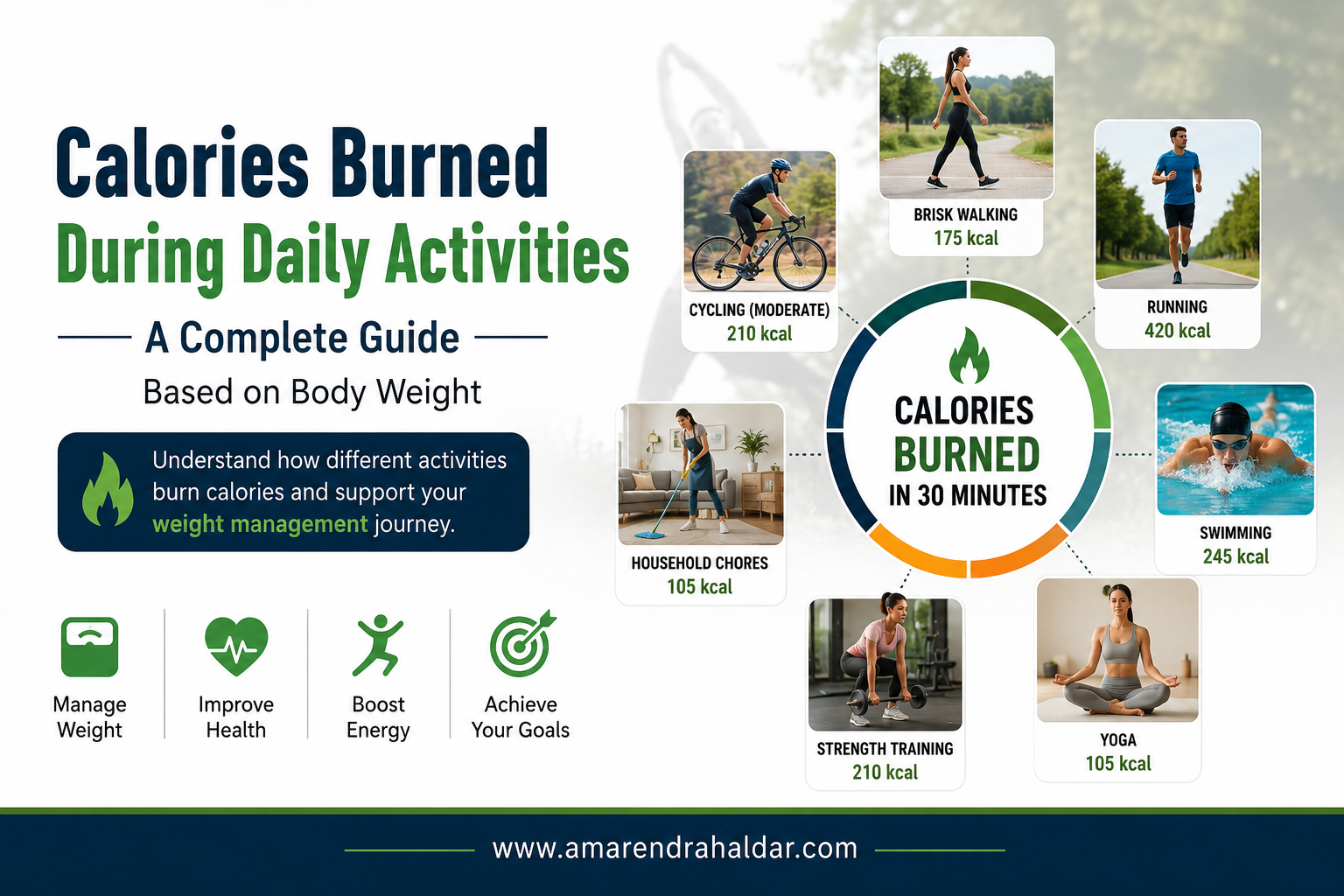
Many people believe that only gym workouts help burn calories. However, daily activities such as walking, cooking, cleaning, gardening, and even standing contribute significantly to total calorie expenditure. Understanding how many calories different activities burn can help individuals make informed decisions about physical activity and weight management.
How Body Weight Affects Calorie Burn
The number of calories burned during any activity depends on several factors, including body weight, age, gender, fitness level, and exercise intensity. In general, heavier individuals burn more calories because their bodies require more energy to perform the same movement.
For example, a person weighing 80 kg will burn more calories during a 30 minute walk than a person weighing 60 kg. This is because moving a larger body mass requires greater energy expenditure.
Daily Activities That Burn Calories
Many everyday tasks contribute to calorie burning. Activities such as cooking, washing utensils, household cleaning, gardening, shopping, and climbing stairs can increase energy expenditure throughout the day. These activities are collectively known as Non Exercise Activity Thermogenesis (NEAT).
NEAT plays a crucial role in maintaining a healthy weight. Individuals with active lifestyles often burn hundreds of additional calories daily through routine movement alone.
Calories Burned Based on Daily Physical Activity & Body Weight
(Approximate Calories Burned in 30 Minutes)
| Activity | 60 kg | 70 kg | 80 kg |
|---|---|---|---|
| Sleeping | 30 kcal | 35 kcal | 40 kcal |
| Sitting & Office Work | 40 kcal | 45 kcal | 50 kcal |
| Standing | 50 kcal | 60 kcal | 70 kcal |
| Cooking | 60 kcal | 70 kcal | 80 kcal |
| Washing Utensils | 65 kcal | 75 kcal | 85 kcal |
| Household Chores | 90 kcal | 105 kcal | 120 kcal |
| Mopping Floor | 105 kcal | 120 kcal | 140 kcal |
| Gardening | 120 kcal | 140 kcal | 160 kcal |
| Shopping (Walking) | 105 kcal | 120 kcal | 140 kcal |
| Walking (Slow) | 90 kcal | 105 kcal | 120 kcal |
| Walking (5 km/hr) | 120 kcal | 140 kcal | 160 kcal |
| Brisk Walking | 150 kcal | 175 kcal | 200 kcal |
| Hiking | 180 kcal | 210 kcal | 240 kcal |
| Cycling (Leisure) | 120 kcal | 140 kcal | 160 kcal |
| Cycling (Moderate) | 180 kcal | 210 kcal | 240 kcal |
| Cycling (Vigorous) | 270 kcal | 315 kcal | 360 kcal |
| Yoga | 90 kcal | 105 kcal | 120 kcal |
| Surya Namaskar | 120 kcal | 140 kcal | 160 kcal |
| Pilates | 120 kcal | 140 kcal | 160 kcal |
| Dancing | 150 kcal | 175 kcal | 200 kcal |
| Zumba | 210 kcal | 245 kcal | 280 kcal |
| Badminton (Recreational) | 180 kcal | 210 kcal | 240 kcal |
| Badminton (Competitive) | 270 kcal | 315 kcal | 360 kcal |
| Table Tennis | 120 kcal | 140 kcal | 160 kcal |
| Cricket | 150 kcal | 175 kcal | 200 kcal |
| Football | 240 kcal | 280 kcal | 320 kcal |
| Basketball | 240 kcal | 280 kcal | 320 kcal |
| Swimming | 210 kcal | 245 kcal | 280 kcal |
| Jump Rope | 300 kcal | 350 kcal | 400 kcal |
| Stair Climbing | 240 kcal | 280 kcal | 320 kcal |
| Strength Training | 180 kcal | 210 kcal | 240 kcal |
| CrossFit/HIIT | 300 kcal | 350 kcal | 400 kcal |
| Jogging (8 km/hr) | 240 kcal | 280 kcal | 320 kcal |
| Running (10 km/hr) | 360 kcal | 420 kcal | 480 kcal |
Exercise Activities and Calorie Burn
Physical activities such as brisk walking, cycling, swimming, jogging, running, dancing, Zumba, strength training, and sports provide even greater calorie expenditure. High intensity activities like jump rope, CrossFit, HIIT workouts, and running can burn significantly more calories in a shorter period.
For example:
- Brisk walking can burn approximately 150-200 calories in 30 minutes.
- Cycling at a moderate pace may burn 180-240 calories.
- Running can burn 360-480 calories or more depending on body weight and speed.
- Jump rope and HIIT workouts may burn over 300 calories in just 30 minutes.
Why Calorie Burn Matters
Understanding calorie expenditure helps individuals manage body weight, improve fitness, and set realistic health goals. While exercise contributes to calorie burning, nutrition remains equally important. Sustainable weight management is achieved when calorie intake and calorie expenditure are balanced appropriately.
Final Thoughts
Every movement counts. Whether it’s taking the stairs, going for a brisk walk, doing household chores, or participating in structured exercise, daily physical activity contributes to overall health and calorie expenditure. Instead of focusing only on gym workouts, aim to stay active throughout the day. Small lifestyle changes can make a significant difference in long term weight management and overall well being.
Sources
- World Health Organization Physical Activity Guidelines
- American College of Sports Medicine Energy Expenditure & Exercise Recommendations
- Centers for Disease Control and Prevention Physical Activity Resources
- National Institutes of Health Weight Management and Physical Activity Research