
Food safety authorities have taken enforcement action in Gandhinagar after an inspection identified potential risks of cross-contamination between manufacturing vessels used for ghee and interesterified vegetable fat.
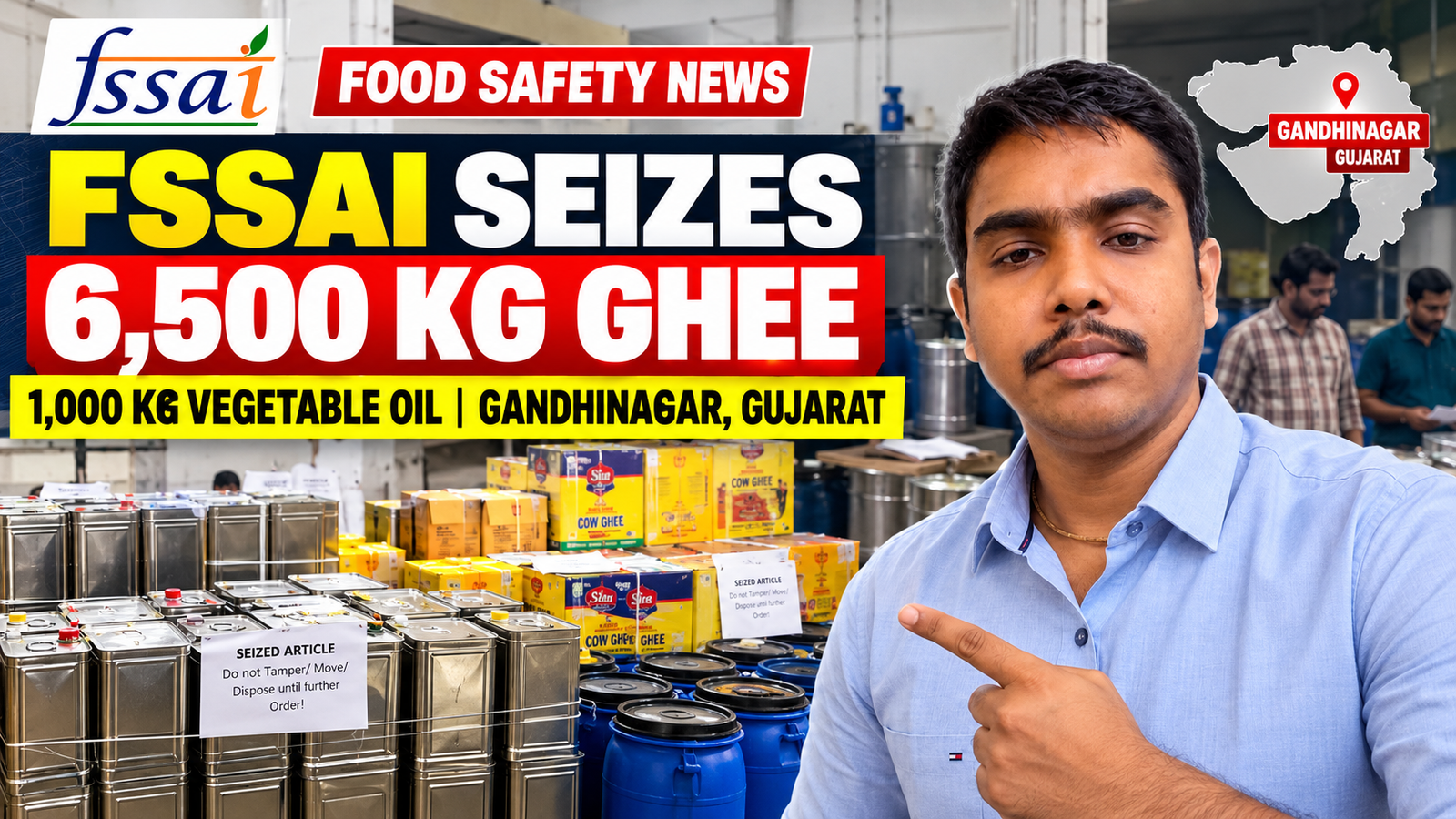
According to a recent update shared by the Food Safety and Standards Authority of India (FSSAI), officials seized approximately 6,500 kg of ghee and 1,000 kg of vegetable oil, with the total stock reportedly valued at around ₹32 lakh.
The action has highlighted concerns over the importance of proper segregation of manufacturing equipment and strict compliance with food safety standards.
WHAT DID FSSAI SEIZE?
The enforcement action involved approximately:
• 6,500 kg of ghee
• 1,000 kg of vegetable oil
• Total quantity: approximately 7,500 kg
• Reported value: around ₹32 lakh
Photographs shared with the enforcement update showed cartons, containers and metal vessels stored at the facility. Some of the seized materials were marked with seizure notices instructing that they should not be tampered with.
WHY WERE THE PRODUCTS SEIZED?
During the inspection, FSSAI officials reportedly detected common linkages between manufacturing vessels used for interesterified vegetable fat and ghee.
According to FSSAI, this arrangement created a high risk of cross-contamination and adulteration.
When different food products are manufactured using interconnected equipment, pipelines or vessels without appropriate segregation and cleaning controls, residues from one product may potentially enter another product.
This becomes particularly important when the products belong to different categories or are required to meet different standards.
However, it is important to understand that a seizure during an inspection does not automatically mean that every kilogram of the seized ghee was laboratory confirmed as adulterated.
The FSSAI update specifically highlighted the manufacturing arrangement and the associated risk of cross contamination and adulteration.
WHY IS GHEE ADULTERATION A CONCERN?
Ghee is one of India's most widely consumed dairy fats. It is commonly used in households, restaurants, sweet shops and food processing businesses.
Because genuine dairy ghee can have a higher market value than some vegetable fats, it can be vulnerable to economically motivated adulteration.
Adulteration may involve the addition or substitution of other fats or oils. Such practices can affect the identity, quality and nutritional characteristics of the product.
For this reason, food regulators regularly conduct surveillance and enforcement activities involving milk products, edible oils, ghee and other commonly consumed foods.
WHAT IS INTERESTERIFIED VEGETABLE FAT?
Interesterification is a food-processing technique used to modify the physical characteristics of fats and oils.
The process rearranges fatty acids within triglycerides to achieve specific characteristics such as texture, melting behaviour and functionality.
Interesterified vegetable fats can have legitimate applications in food manufacturing.
Therefore, the presence of interesterified vegetable fat itself does not automatically mean that a product is unsafe or illegal.
In the Gandhinagar case, the concern reported by FSSAI was related to the common manufacturing linkages between vessels used for different products and the resulting risk of cross-contamination and adulteration.
WHY PROPER MANUFACTURING SEGREGATION MATTERS
Food manufacturers handling different types of fats and oils need to maintain appropriate controls to prevent unintended mixing.
Important food-safety practices can include:
• Proper segregation of raw materials
• Appropriate cleaning and sanitation of equipment
• Proper identification of tanks, pipelines and vessels
• Effective production controls
• Batch-wise traceability
• Quality-control testing
• Proper storage and handling
• Compliance with applicable FSSAI requirements
These controls are particularly important when a facility manufactures products with different identities and compositions.
WHAT SHOULD CONSUMERS CHECK WHEN BUYING GHEE?
Consumers can take several simple precautions when purchasing packaged ghee.
Check the following information on the package:
• FSSAI licence details
• Manufacturer's name and address
• Product name
• Batch or lot number
• Manufacturing or packing date
• Best before or expiry information
• Ingredient information where applicable
• Nutritional information
• Proper packaging and sealing
Consumers should also be cautious about products sold at unusually low prices or products making suspicious claims.
However, consumers should not rely solely on viral social media videos or homemade adulteration tests to determine whether a product is genuine.
Laboratory testing remains the appropriate method for confirming many types of food adulteration.
DOES THIS MEAN ALL GHEE IS UNSAFE?
No, the Gandhinagar enforcement action concerns a specific manufacturing operation inspected by food safety authorities.
The seizure does not mean that all ghee available in Gujarat or across India is adulterated or unsafe. Consumers should avoid unnecessary panic and instead purchase food products from reliable manufacturers and check the information provided on the packaging.
At the same time, enforcement actions are important because they allow regulators to identify potential food safety risks and take appropriate action.
FSSAI'S ROLE IN FOOD SAFETY
The Food Safety and Standards Authority of India is responsible for regulating and supervising food safety in India.
Its activities include food-safety standards, licensing and registration, surveillance, sampling, testing and enforcement.
Food businesses are required to comply with applicable food safety regulations and maintain appropriate manufacturing and quality control practices.
The Gandhinagar action demonstrates that food safety inspections can examine not only finished products but also the manufacturing process and equipment used to produce them.
WHY THIS ACTION IS IMPORTANT
The seizure of approximately 6,500 kg of ghee and 1,000 kg of vegetable oil, reportedly worth around ₹32 lakh, highlights the importance of regulatory monitoring in the edible fat sector.
The case also demonstrates why food safety involves more than simply checking the final product.
Manufacturing equipment, storage systems, pipelines, cleaning procedures, raw materials, and production processes can all influence the safety and integrity of food products.
If different products are manufactured using interconnected equipment, appropriate controls are necessary to prevent unintended cross-contamination.
CONCLUSION
The seizure of approximately 6,500 kg of ghee and 1,000 kg of vegetable oil in Gandhinagar, Gujarat, has raised important food-safety concerns.
According to FSSAI's enforcement update, officials detected common linkages between manufacturing vessels used for interesterified vegetable fat and ghee. The arrangement was considered a high risk for cross contamination and adulteration.
The incident highlights the importance of proper manufacturing segregation, sanitation, traceability, quality control and compliance with food safety regulations.
For consumers, the incident is a reminder to purchase ghee and other edible products from reliable sources and to check product and manufacturer details before buying.
Most importantly, consumers should distinguish between a regulatory seizure based on identified risks and a final laboratory confirmed finding of adulteration.
Food safety requires cooperation between regulators, manufacturers and consumers to ensure that food products placed on the market meet the required standards.
SOURCE: Food Safety and Standards Authority of India (FSSAI)



💬 Comments (0)
Be respectful. Website links and phone numbers are not allowed.