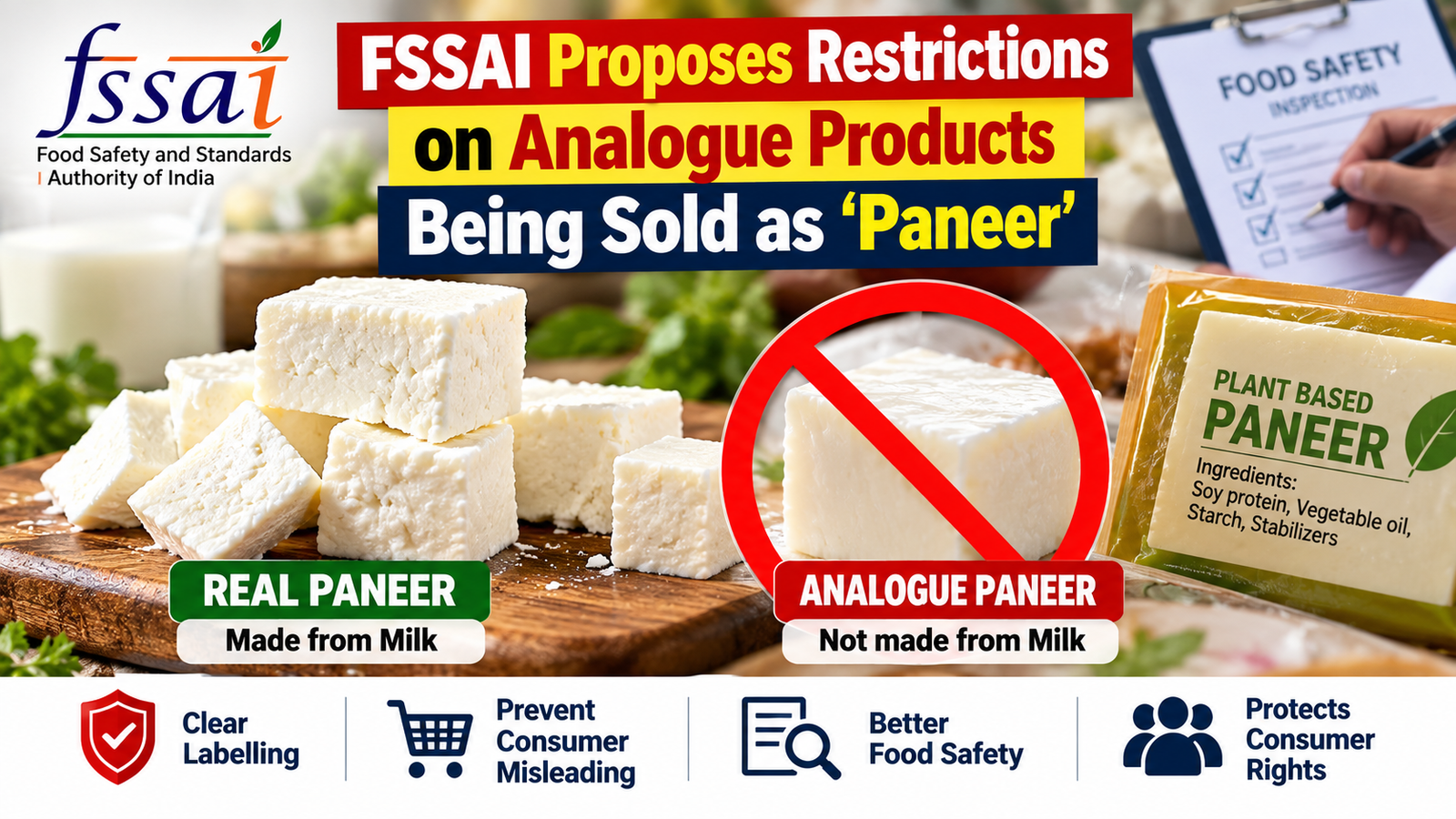
New Delhi, September 24, 2026: The Food Safety and Standards Authority of India (FSSAI) has proposed new restrictions on the use of the word “Paneer” for products that are not made from milk-derived ingredients. The proposed amendment aims to prevent consumers from being misled about the nature and composition of food products.
The move is part of FSSAI’s efforts to improve food labelling and ensure that consumers can clearly understand what they are buying and eating.
FSSAI Proposes Restrictions on Non-Milk Products Using the Name ‘Paneer’
According to the draft amendment issued on September 24, 2026, FSSAI has proposed changes to the Food Safety and Standards (Prohibition and Restrictions on Sales) Regulations, 2011.
The proposal covers paneer made from constituents that are not derived from milk. Under the proposed rules, products licensed or registered under the category of “Analogue in Dairy Context” would not be allowed to use the term “Paneer” in their product name, labelling or marketing.
The proposal is mainly focused on how non-milk products are represented and sold, rather than a blanket ban on every non-dairy alternative food.
What Is Analogue Paneer?
Analogue dairy products are products designed to resemble traditional dairy foods but may contain ingredients that are not derived from milk.
Consumers may find these products similar to traditional paneer in appearance, texture or use. However, they can be different in their ingredients and composition.
FSSAI’s proposed measure is intended to make this difference clearer to consumers.
Why Does the Proposed Rule Matter?
Clear food labelling is important because consumers may choose paneer as part of their regular diet and may expect it to be a milk-based product.
If a non-milk product is presented simply as paneer, consumers may not immediately understand what ingredients have been used.
The proposed amendment would create a clearer distinction between traditional milk-derived paneer and products made using non-milk ingredients.
FSSAI has also previously raised concerns about dairy analogues being sold under dairy names. In April 2026, FSSAI’s West Region issued directions concerning cheese analogues and stated that selling a cheese analogue as “paneer” is a violation of food safety requirements.
Is Analogue Paneer Completely Banned in India?
Not yet as a final nationwide rule.
This distinction is important.
The September 24 notification is a draft amendment, not a final regulation. The proposal is part of the regulatory process, and comments and suggestions have been invited on the draft.
Therefore, saying that “analogue paneer has been completely banned across India” may be misleading at this stage.
The proposed restriction is specifically focused on preventing non-milk-derived products from being represented or marketed as “Paneer.”
What Should Consumers Check?
Consumers can take a few simple steps when purchasing paneer or similar products:
1. Check the product name
Look carefully at the name printed on the package.
2. Read the ingredient list
The ingredient list can help consumers understand whether the product is made from milk or contains non-dairy ingredients.
3. Check the food label
Do not rely only on product pictures or appearance.
4. Be careful with loose products
When buying paneer from shops or restaurants, consumers can ask what type of product is being used.
5. Look for required food information
Packaged food products should carry the required food safety and labelling information.
What Happens Next?
The FSSAI draft will go through the regulatory process before the proposed provisions become final.
The development could have an impact on food manufacturers, restaurants, retailers and consumers because it may bring clearer rules around how dairy alternatives are named and marketed.
For now, consumers should understand the difference between traditional milk-derived paneer and non-milk dairy analogue products, while food businesses should follow the applicable FSSAI food safety and labelling requirements.


Verry Nice
Nice