

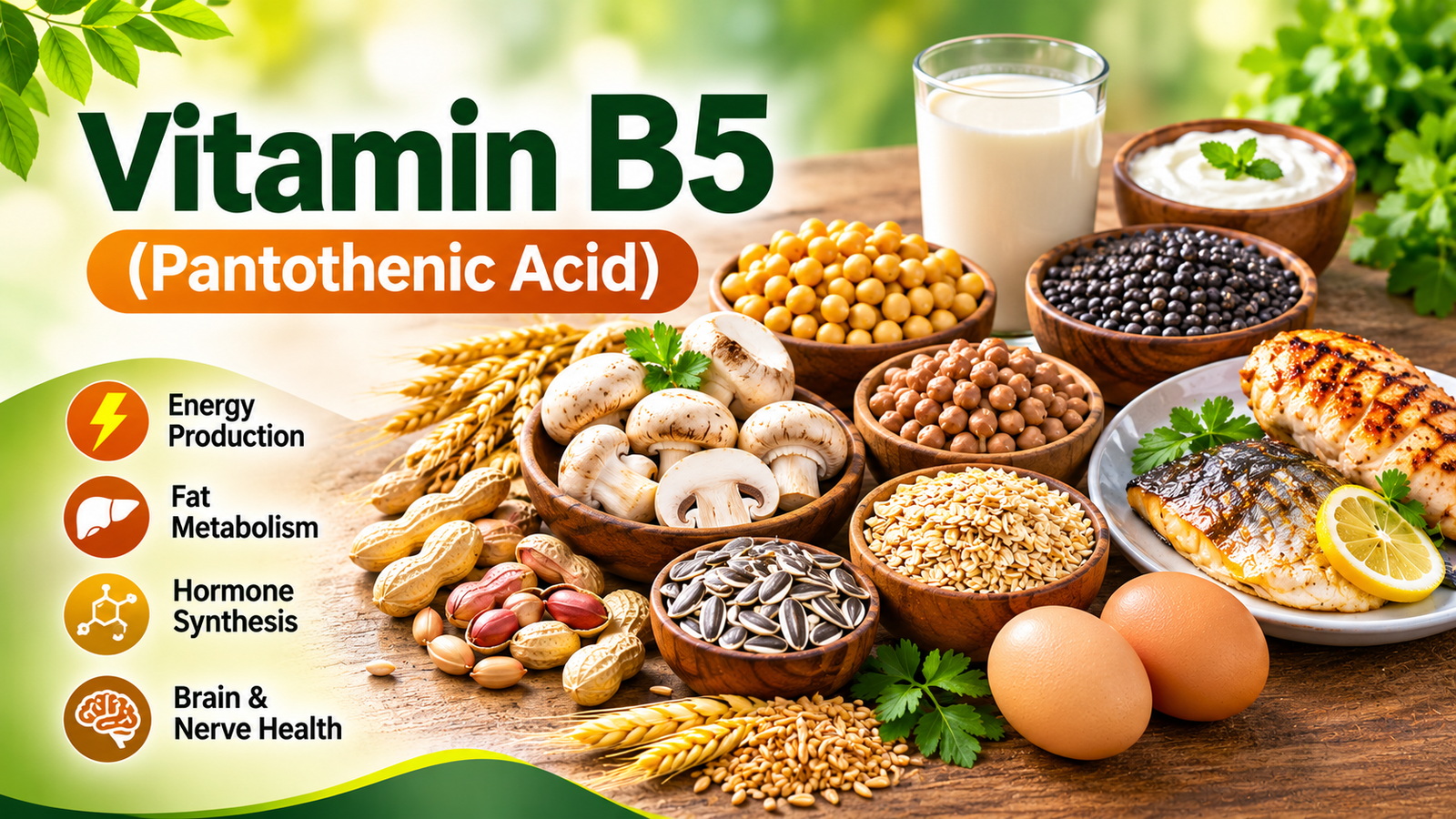
Vitamin B5, also known as pantothenic acid, is an essential water-soluble vitamin belonging to the B-complex family. It plays an important role in energy production, fat metabolism, hormone synthesis and normal cellular functioning. The body needs vitamin B5 to produce coenzyme A (CoA), a compound involved in hundreds of biochemical reactions.
A balanced Indian diet containing whole grains, pulses, mushrooms, peanuts, milk, eggs, fish and chicken can provide vitamin B5. Since this vitamin is naturally present in a wide variety of foods, its deficiency is uncommon in healthy individuals.
However, understanding its functions, food sources and deficiency symptoms is important for maintaining good nutritional health.
In this article, we will explore the health benefits of vitamin B5, pantothenic acid-rich Indian foods, recommended daily intake, deficiency symptoms and practical ways to maintain adequate vitamin B5 levels.
Quick Summary: Vitamin B5
Other name: Pantothenic acid
Vitamin category: Water-soluble B-complex vitamin
Main function: Energy metabolism
Important compound: Coenzyme A (CoA)
Major benefits: Supports fat metabolism, cellular function and hormone synthesis
Vegetarian sources: Mushrooms, peanuts, sunflower seeds, whole grains, pulses and soybeans
Non-vegetarian sources: Chicken, eggs, fish and liver
Deficiency disease: No specific commonly recognized deficiency disease
Deficiency symptoms: Fatigue, irritability, numbness and burning sensations in the feet
Deficiency risk: Very uncommon in people consuming a varied diet
1. What Is Vitamin B5 (Pantothenic Acid)?
Vitamin B5 is an essential water-soluble vitamin required for several important metabolic activities in the human body.
The name pantothenic acid comes from the Greek word pantos, meaning "everywhere". It reflects the fact that this vitamin is widely distributed in different foods.
The most important function of vitamin B5 is its involvement in the production of coenzyme A.
Coenzyme A is essential for:
Converting nutrients into usable energy.
Breaking down fatty acids.
Producing fatty acids.
Metabolizing carbohydrates and proteins.
Synthesizing certain hormones.
Supporting normal cellular metabolism.
Vitamin B5 is also required for the formation of acyl carrier protein, which participates in fatty acid synthesis.
Because of these functions, pantothenic acid is essential for normal growth, metabolism and cellular activity.
2. Health Benefits of Vitamin B5
Vitamin B5 supports several important biological processes.
2.1 Supports Energy Production
One of the most important functions of vitamin B5 is helping the body produce energy from food.
The body obtains energy from carbohydrates, proteins and fats. Coenzyme A participates in metabolic reactions that help process these nutrients.
It plays an important role in:
Carbohydrate metabolism.
Fat metabolism.
Protein metabolism.
The citric acid cycle.
Energy production within cells.
Adequate vitamin B5 intake helps maintain normal energy metabolism.
However, taking additional vitamin B5 supplements does not necessarily increase energy levels in people who already consume sufficient amounts.
2.2 Supports Fat Metabolism
Vitamin B5 is essential for the synthesis and breakdown of fatty acids.
Coenzyme A helps transport and process fatty acid molecules during metabolic reactions.
These processes are important for:
Fatty acid synthesis.
Fat breakdown.
Cellular energy production.
Lipid metabolism.
Maintaining normal cellular structures.
Therefore, vitamin B5 contributes to normal fat metabolism.
2.3 Supports Hormone Synthesis
Vitamin B5 participates in metabolic pathways involved in the production of steroid hormones.
These include certain hormones produced by the adrenal glands.
Coenzyme A is required for several biochemical reactions involved in cholesterol and steroid synthesis.
Adequate vitamin B5 intake supports normal metabolic processes, although supplementation has not been established as a treatment for hormonal imbalance.
2.4 Supports Brain and Nervous System Function
Vitamin B5 contributes to normal nervous system functioning.
Coenzyme A participates in the production of acetylcholine, an important neurotransmitter involved in communication between nerve cells.
Acetylcholine plays a role in:
Memory.
Learning.
Muscle movement.
Nerve communication.
Normal nervous system activity.
Severe vitamin B5 deficiency has been associated with neurological symptoms, although such deficiency is extremely rare.
2.5 Supports Healthy Skin
Pantothenic acid participates in normal cellular metabolism.
A derivative of vitamin B5 called dexpanthenol is commonly used in skincare products.
It is included in certain creams, moisturisers and ointments.
However, there is insufficient evidence that taking additional oral vitamin B5 improves acne or guarantees healthier skin in people without a deficiency.
2.6 Supports Fatty Acid Synthesis
Vitamin B5 is required for the activity of acyl carrier protein.
This protein participates in fatty acid synthesis, an important process for producing lipids needed by cells.
Fatty acids are essential components of cell membranes and also serve as an energy source.
2.7 Supports Normal Cellular Function
Coenzyme A participates in numerous biochemical reactions throughout the body.
These reactions are necessary for maintaining normal cellular activity, nutrient metabolism and the production of important biological molecules.
Adequate vitamin B5 intake therefore supports several essential physiological functions.
3. Vitamin B5 Food Sources: Indian Diet
Vitamin B5 is naturally present in many plant-based and animal-based foods.
Indian households can obtain pantothenic acid through commonly available ingredients.
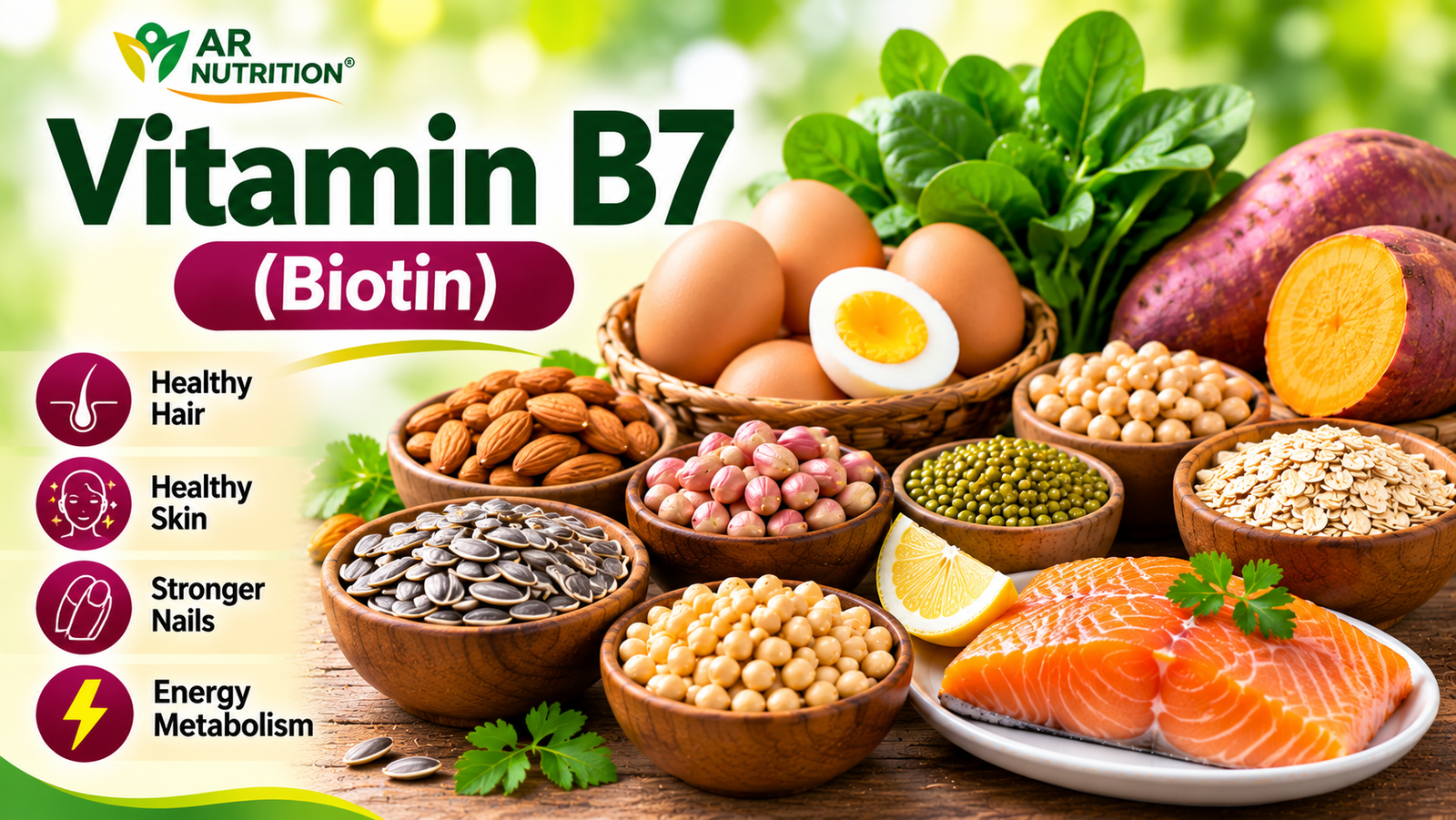
3.1 Vegetarian Sources of Vitamin B5
| Food | How to include it |
|---|---|
| Mushrooms | Mushroom curry or stir-fry |
| Peanuts | Roasted groundnuts |
| Sunflower seeds | Add to salads or snacks |
| Soybeans | Soybean curry |
| Chickpeas | Chana masala or boiled chana |
| Moong dal | Dal and khichdi |
| Urad dal | Idli, dosa and dal |
| Whole wheat | Roti and dalia |
| Brown rice | Lunch or dinner |
| Sweet potatoes | Boiled or roasted |
| Broccoli | Vegetable stir-fry |
| Cauliflower | Gobi sabzi |
Mushrooms and sunflower seeds are particularly useful sources of pantothenic acid. Pulses, whole grains and peanuts also contribute to overall vitamin B5 intake.
3.2 Non-Vegetarian Sources of Vitamin B5
Animal-based foods can provide useful amounts of vitamin B5.
Examples include:
Chicken.
Chicken liver.
Fish.
Eggs.
Meat.
Organ meats.
Chicken liver is particularly rich in pantothenic acid.
Including suitable animal-based protein sources can help improve dietary diversity.
3.3 Milk and Dairy Products
Milk and other dairy products contribute to daily vitamin B5 intake.
Examples include:
Cow's milk.
Curd.
Yogurt.
Cheese.
Although dairy products are not always the richest sources, they can contribute to overall nutritional adequacy.
3.4 Fruits and Vegetables
Certain vegetables also provide pantothenic acid.
Examples include:
Mushrooms.
Potatoes.
Broccoli.
Cauliflower.
Avocado.
Sweet potatoes.
Combining vegetables with pulses and whole grains helps improve the overall nutritional quality of everyday Indian meals.
Note: Actual vitamin B5 content varies according to food variety, portion size, processing, storage and cooking methods.
4. Recommended Daily Intake of Vitamin B5
Vitamin B5 requirements vary according to age and life stage.
The following values are Adequate Intake (AI) recommendations established by the US National Academies and reported by the NIH Office of Dietary Supplements.
| Age or category | Daily intake |
|---|---|
| Infants 0-6 months | 1.7 mg |
| Infants 7-12 months | 1.8 mg |
| Children 1-3 years | 2 mg |
| Children 4-8 years | 3 mg |
| Children 9-13 years | 4 mg |
| Adolescents 14-18 years | 5 mg |
| Adults | 5 mg |
| Pregnant women | 6 mg |
| Breastfeeding women | 7 mg |
These are international reference values, not India-specific ICMR-NIN recommendations.
An Adequate Intake is used when scientific evidence is insufficient to establish a Recommended Dietary Allowance (RDA).
Individual nutritional requirements may vary according to health status, dietary intake and life stage.
5. Vitamin B5 Deficiency: Causes and Risk Factors
Vitamin B5 deficiency is extremely rare because pantothenic acid is present in a wide variety of foods.
Severe deficiency has mainly been observed in people with very restricted dietary intake or under controlled experimental conditions.
Possible contributing factors include:
5.1 Severe Malnutrition
People experiencing prolonged inadequate food intake may develop multiple nutrient deficiencies.
Vitamin B5 inadequacy may occur alongside deficiencies of other essential vitamins and minerals.
5.2 Extremely Restrictive Diets
Consuming a very limited variety of foods over a long period can increase the risk of nutritional inadequacy.
A balanced diet containing cereals, pulses, vegetables, nuts and suitable protein sources helps reduce this risk.
5.3 Certain Genetic Conditions
Pantothenate kinase-associated neurodegeneration (PKAN) is a rare inherited neurological disorder involving impaired coenzyme A metabolism.
It is not simply a dietary vitamin B5 deficiency.
People with this condition require specialist medical assessment and management.
5.4 Poor Overall Nutritional Intake
Severe undernutrition and inadequate dietary diversity may affect the intake of several essential nutrients, including pantothenic acid.
6. Symptoms of Vitamin B5 Deficiency
Although uncommon, vitamin B5 deficiency has been associated with several symptoms.
Possible symptoms include:
Fatigue.
Headache.
Irritability.
Restlessness.
Disturbed sleep.
Numbness in the hands and feet.
Burning sensations in the feet.
Digestive disturbances.
Reduced appetite.
6.1 Burning Feet Sensation
A burning sensation in the feet has historically been associated with severe pantothenic acid deficiency.
It may occur alongside numbness or tingling sensations.
However, burning feet can also result from diabetes, vitamin B12 deficiency, nerve disorders and other medical conditions.
6.2 Fatigue and Weakness
Vitamin B5 participates in energy metabolism.
Severe deficiency may contribute to fatigue and weakness.
However, fatigue alone does not confirm vitamin B5 deficiency. Other nutritional and medical conditions can cause similar symptoms.
6.3 Sleep Disturbances
Experimental vitamin B5 deficiency has been associated with disturbed sleep and restlessness.
These symptoms are not specific to pantothenic acid deficiency.
Important: Do not diagnose vitamin B5 deficiency based only on symptoms. Seek medical evaluation if symptoms persist.
7. How to Prevent Vitamin B5 Deficiency
The best way to maintain adequate vitamin B5 intake is to consume a varied and balanced diet.
7.1 Include Pulses Regularly
Different pulses provide several essential nutrients.
Include:
Moong dal.
Urad dal.
Masoor dal.
Chana dal.
Rajma.
Kala chana.
Soybeans.
7.2 Choose Whole Grains
Whole wheat, oats and brown rice can contribute to pantothenic acid intake.
Choose minimally processed grain options whenever practical.
7.3 Include Nuts and Seeds
Peanuts, sunflower seeds and cashews provide pantothenic acid along with other nutrients.
Include them in moderate quantities according to your dietary requirements.
7.4 Consume Vegetables Daily
Include mushrooms, cauliflower, broccoli, potatoes and other seasonal vegetables.
Different vegetables provide different vitamins, minerals and dietary fiber.
7.5 Maintain Adequate Protein Intake
Include suitable protein sources according to your dietary preferences.
Options include:
Dal and legumes.
Soybeans.
Milk and curd.
Eggs.
Fish.
Chicken.
7.6 Avoid Excessive Food Processing
Pantothenic acid can be lost during food processing and cooking.
Some studies report considerable losses depending on the food and processing method.
Prefer fresh, minimally processed ingredients and avoid unnecessary prolonged cooking.
8. Sample Indian Diet Plan for Vitamin B5 Intake
Here is an illustrative meal pattern using commonly available Indian foods.
| Meal | Suggested foods |
|---|---|
| Early morning | Water and a small handful of peanuts |
| Breakfast | Idli with sambar |
| Mid-morning | Seasonal fruit |
| Lunch | Whole wheat roti, urad dal, cauliflower sabzi and curd |
| Evening snack | Roasted kala chana |
| Dinner | Moong dal khichdi with vegetables |
| Optional protein | Egg, fish or chicken according to preference |
This meal pattern provides a combination of carbohydrates, protein, fiber and several essential micronutrients.
The actual vitamin B5 content depends on portion sizes, ingredients and food preparation methods.
This is an illustrative meal pattern, not a therapeutic diet or a guaranteed daily vitamin B5 requirement plan.
9. Can Vitamin B5 Supplements Be Taken Daily?
Vitamin B5 supplements are available individually and in combination with other B-complex vitamins.
Common supplemental forms include:
Calcium pantothenate.
Pantothenic acid.
Pantethine.
Most healthy individuals can obtain sufficient vitamin B5 through a varied diet.
High-dose supplementation is generally unnecessary without a specific nutritional or medical indication.
Very large supplemental doses, such as 10,000 mg per day, can cause digestive problems, including diarrhea and gastrointestinal discomfort.
There is currently no established tolerable upper intake level for pantothenic acid because available evidence has been insufficient to determine one.
Do not take high-dose supplements for fatigue, hormonal problems, cholesterol or skin conditions without medical advice.
10. Who May Need Special Attention to Vitamin B5 Intake?
Certain individuals may require additional nutritional assessment.
These include:
People experiencing severe malnutrition.
Individuals following extremely restrictive diets.
People with certain rare genetic metabolic conditions.
Individuals with poor overall dietary intake.
A qualified dietitian can help assess food intake and identify potential nutritional gaps.
Routine vitamin B5 testing is not generally recommended for healthy individuals because deficiency is uncommon.
11. Frequently Asked Questions About Vitamin B5
Q1. What is another name for vitamin B5?
Vitamin B5 is also known as pantothenic acid. It is a water-soluble vitamin belonging to the B-complex family.
Q2. Which Indian foods are rich in vitamin B5?
Mushrooms, sunflower seeds, peanuts, whole grains, pulses, soybeans, eggs, chicken and chicken liver are useful sources.
Q3. What does vitamin B5 do in the body?
Vitamin B5 helps produce coenzyme A, which is required for energy metabolism, fatty acid synthesis and the breakdown of nutrients.
Q4. Can vitamin B5 deficiency cause burning feet?
Severe deficiency has historically been associated with burning and numbness in the feet. However, these symptoms have several other possible causes, including nerve disorders and vitamin B12 deficiency.
Q5. Is vitamin B5 good for skin?
Vitamin B5 participates in normal cellular metabolism. Its derivative, dexpanthenol, is commonly used in skincare products. However, evidence that additional oral vitamin B5 improves skin health in people without deficiency is limited.
Q6. Can vitamin B5 help with hair growth?
Vitamin B5 supports normal metabolism, but there is insufficient scientific evidence that supplementation promotes hair growth in people who already have adequate nutritional intake.
Q7. Is vitamin B5 water-soluble?
Yes. Pantothenic acid is water-soluble and is not stored in large amounts in the body.
Q8. Can vegetarians get enough vitamin B5?
Yes. Vegetarians can obtain pantothenic acid from mushrooms, peanuts, sunflower seeds, soybeans, whole grains, pulses and vegetables.
Q9. Is vitamin B5 deficiency common?
No. Vitamin B5 deficiency is extremely rare because pantothenic acid is present in many plant-based and animal-based foods.
Q10. Can vitamin B5 supplements improve energy?
Vitamin B5 is essential for energy metabolism, but taking additional supplements does not necessarily improve energy levels in people who already consume sufficient amounts.
Conclusion
Vitamin B5 (pantothenic acid) is an essential water-soluble nutrient that supports energy metabolism, fatty acid production, hormone synthesis and normal cellular functioning.
Indian diets can provide vitamin B5 through everyday foods such as mushrooms, peanuts, sunflower seeds, pulses, soybeans, whole wheat, eggs, milk and chicken.
Severe deficiency is uncommon because this vitamin is widely available in different food groups.
Maintaining dietary diversity and consuming adequate amounts of whole grains, pulses, vegetables, nuts and suitable protein sources can help support overall nutritional health.
Rather than depending on unnecessary supplements, focus on a balanced diet that provides essential nutrients in appropriate quantities.
Healthy nutrition begins with a diverse diet, informed food choices and consistent healthy habits.
Scientific References
National Institutes of Health, Office of Dietary Supplements. Pantothenic Acid: Fact Sheet for Health Professionals.
National Institutes of Health. Pantothenic Acid: Fact Sheet for Consumers.
ICMR-National Institute of Nutrition. Indian Food Composition Tables 2017.
National Academies of Sciences. Dietary Reference Intakes for Pantothenic Acid.
Medical Disclaimer: This article is intended for general educational purposes. It does not replace individual medical or dietetic advice, diagnosis or treatment. Consult a qualified healthcare professional before taking nutritional supplements.


💬 Comments (0)
Be respectful. Website links and phone numbers are not allowed.