
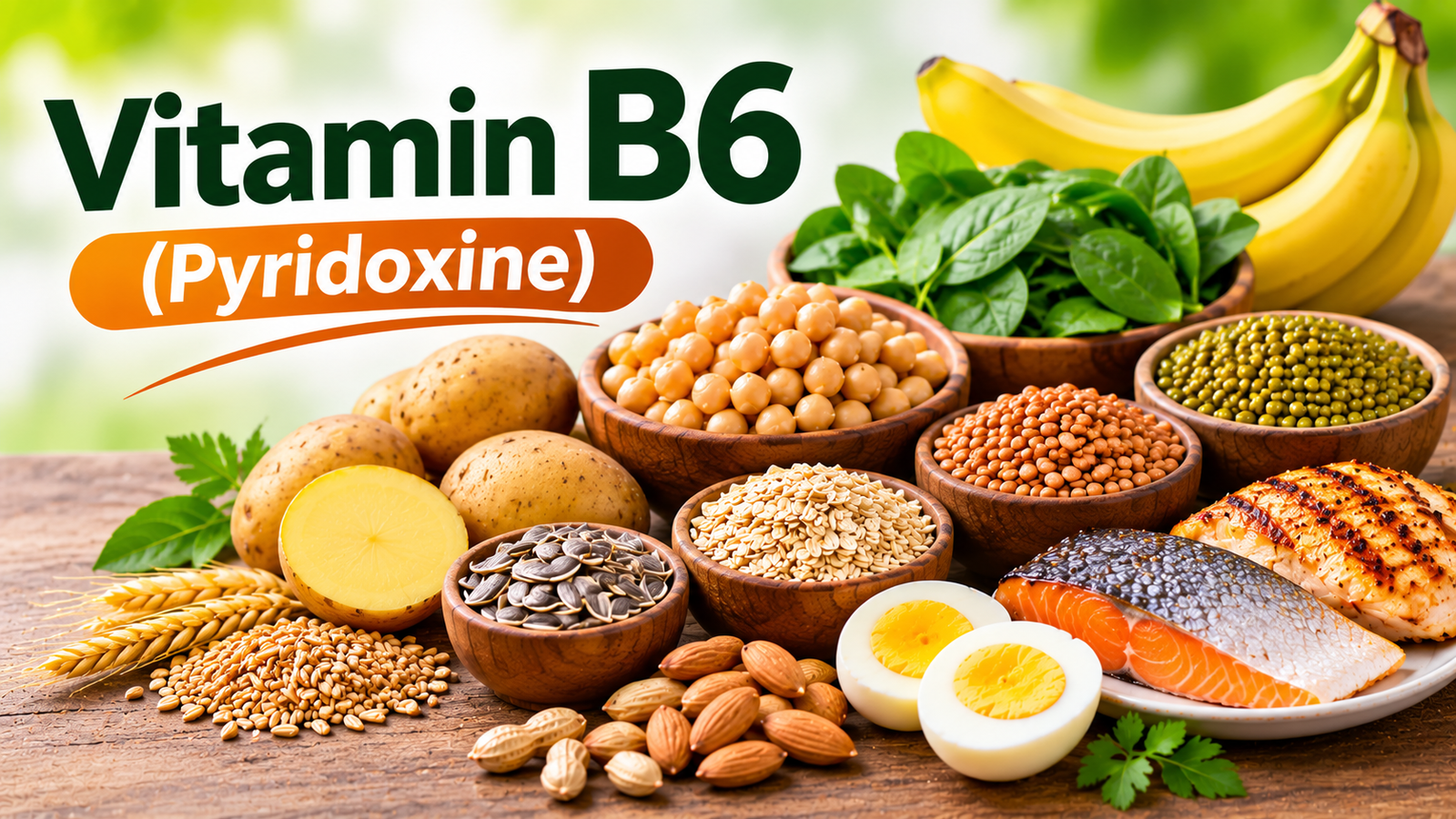
Vitamin B6, also known as pyridoxine, is an essential water-soluble vitamin that plays an important role in metabolism, brain function, nervous system health and red blood cell production. It helps the body use proteins, carbohydrates and fats and supports the production of several important chemical messengers in the brain.
Vitamin B6 is naturally present in many foods, including chickpeas, bananas, potatoes, whole grains, nuts, fish and poultry. A balanced diet usually provides adequate amounts, but certain medical conditions, poor dietary intake and some medications can increase the risk of deficiency.
In this article, we will explore the benefits of vitamin B6, its food sources in India, daily requirements, deficiency symptoms and practical ways to maintain adequate intake.
What Is Vitamin B6?
Vitamin B6 is a water-soluble vitamin that belongs to the vitamin B complex group. It is the general name for several related compounds, including:
Pyridoxine.
Pyridoxal.
Pyridoxamine.
Their phosphorylated forms.
The active coenzyme forms are pyridoxal 5'-phosphate (PLP) and pyridoxamine 5'-phosphate (PMP).
These forms help enzymes carry out more than 100 biochemical reactions, particularly those involved in protein and amino acid metabolism.
Vitamin B6 is not stored in large amounts in the body, so regular intake through food is important.
Health Benefits of Vitamin B6
1. Supports Brain Function
Vitamin B6 is involved in the production of neurotransmitters, which are chemical messengers that allow nerve cells to communicate.
It contributes to the synthesis of:
Serotonin.
Dopamine.
Gamma-aminobutyric acid (GABA).
Noradrenaline.
These substances participate in mood regulation, nerve signaling, sleep and other brain functions.
Adequate vitamin B6 intake supports normal neurological function. However, taking extra vitamin B6 does not automatically improve mood, memory or concentration in people who already have adequate levels.
2. Helps in Hemoglobin Formation
Hemoglobin is a protein in red blood cells that carries oxygen throughout the body.
Vitamin B6 participates in hemoglobin synthesis. Severe deficiency can contribute to a type of anemia called microcytic anemia, in which red blood cells are smaller than normal.
Good dietary sources include chickpeas, potatoes, bananas, fish, poultry and whole grains.
3. Supports Protein Metabolism
One of the most important functions of vitamin B6 is its role in protein metabolism.
It helps the body:
Break down dietary proteins.
Process amino acids.
Convert amino acids into other useful compounds.
Support normal tissue maintenance.
People who consume a variety of protein-rich foods should also obtain vitamin B6 through their regular diet.
4. Supports Immune Function
Vitamin B6 contributes to normal immune system function. It is involved in the production and activity of immune cells and proteins that help the body respond to infections.
A deficiency may negatively affect immune function. Maintaining adequate intake is therefore important for overall nutritional health.
5. Helps Maintain Normal Nervous System Function
Vitamin B6 supports the normal functioning of the brain and nervous system through its role in neurotransmitter production and other metabolic processes.
Deficiency may be associated with symptoms such as irritability, confusion, depression and peripheral nerve problems.
However, high-dose supplementation is not a safe way to improve nerve health. Excessive vitamin B6 from supplements can itself cause nerve damage.
6. Supports Energy Metabolism
Vitamin B6 helps enzymes process carbohydrates, proteins and fats.
It is involved in glycogen breakdown, which helps release stored glucose when the body needs energy.
Vitamin B6 does not directly provide calories, but it helps the body use nutrients obtained from food.
7. Helps Regulate Homocysteine Metabolism
Homocysteine is an amino acid produced during normal protein metabolism.
Vitamin B6 participates in biochemical reactions that help convert homocysteine into other substances. Folate and vitamin B12 also play important roles in homocysteine metabolism.
However, lowering homocysteine through vitamin supplementation has not consistently been shown to prevent heart attacks or other cardiovascular events. Supplements should not be used as a substitute for appropriate cardiovascular care.
8. Supports Normal Pregnancy and Infant Development
Vitamin B6 is involved in protein metabolism, neurotransmitter production and brain development.
Adequate intake is important during pregnancy and breastfeeding. Pregnant women should follow appropriate dietary and supplement advice from their healthcare professionals.
Vitamin B6 is sometimes used under medical guidance for pregnancy-related nausea. It should not be taken in high doses without professional advice.
Vitamin B6-Rich Foods in India
Vitamin B6 is found in a wide variety of plant-based and animal-based foods. Including different food groups in your daily diet can help meet your nutritional requirements.
1. Pulses and Legumes
Useful options include:
Chickpeas (chana).
Bengal gram.
Green gram (moong).
Kidney beans (rajma).
Black gram (urad dal).
Lentils (masoor dal).
Soybeans.
Black-eyed peas (lobia).
Chickpeas are particularly useful sources of vitamin B6 and can be included in chana curry, salads, chaat and hummus.
2. Fruits
Some fruits that provide vitamin B6 include:
Banana.
Papaya.
Avocado.
Watermelon.
Guava.
Bananas are a convenient snack and can be included in breakfast, smoothies or fruit bowls.
3. Vegetables
Include a variety of vegetables such as:
Potato.
Sweet potato.
Spinach.
Green peas.
Carrot.
Cauliflower.
Other starchy vegetables.
Potatoes and other starchy vegetables can contribute useful amounts of vitamin B6.
4. Nuts and Seeds
Some options include:
Sunflower seeds.
Pistachios.
Walnuts.
Peanuts.
Hazelnuts.
Nuts and seeds also provide healthy fats, fiber, protein and other micronutrients.
5. Whole Grains and Millets
Include:
Whole wheat.
Brown rice.
Oats.
Ragi.
Bajra.
Jowar.
Other whole grains and millets.
Choosing a variety of whole grains can help improve overall dietary quality.
6. Animal-Based Foods
For people who consume animal foods, sources include:
Chicken.
Fish.
Tuna.
Salmon.
Meat.
Organ meats.
Fish and poultry are useful sources of vitamin B6.
Vitamin B6 Food Sources: Selected Examples
The following examples are based on the US National Institutes of Health food composition data. Values are approximate and depend on serving size, variety and preparation.
| Food | Serving | Vitamin B6 |
|---|---|---|
| Chickpeas, cooked | 1 cup | 1.1 mg |
| Tuna, cooked | 85 g | 0.9 mg |
| Salmon, cooked | 85 g | 0.6 mg |
| Chicken breast, cooked | 85 g | 0.5 mg |
| Potato, boiled | 1 cup | 0.4 mg |
| Banana | 1 medium | 0.4 mg |
| Bulgur, cooked | 1 cup | 0.2 mg |
These are reference values, not exact values for every Indian food preparation
Daily Requirement of Vitamin B6
The recommended intake of vitamin B6 depends on age, sex and life stage.
The following adult values are from the ICMR-NIN 2020 Indian nutrient requirement recommendations:
| Group | Recommended daily intake |
|---|---|
| Adult men | 2.4 mg |
| Adult women | 1.9 mg |
These are Indian adult recommendations. Requirements for children, adolescents and pregnancy or lactation should be assessed using the relevant age- and life-stage-specific recommendations.
The US National Institutes of Health uses different recommendations, so it is important not to mix values from different national guidelines.
Vitamin B6 Deficiency
Vitamin B6 deficiency is relatively uncommon when people consume a varied diet. When it occurs, it may be associated with deficiencies of other B vitamins.
Deficiency can develop due to inadequate intake, impaired absorption, certain medical conditions or medication use.
Common Symptoms of Vitamin B6 Deficiency
Possible symptoms include:
Skin rashes or dermatitis.
Cracks at the corners of the mouth.
Sore or swollen tongue.
Irritability.
Confusion.
Depressive symptoms.
Weakness.
Reduced immune function.
Microcytic anemia.
Nerve-related symptoms in some cases.
Mild deficiency may not produce obvious symptoms for a long time.
These symptoms are not specific to vitamin B6 deficiency. Other nutritional deficiencies and medical conditions can cause similar problems.
Causes of Vitamin B6 Deficiency
Some possible causes include:
1. Poor Dietary Intake
A severely restricted or nutritionally inadequate diet may increase the risk of vitamin B6 deficiency.
2. Kidney Disease
People with chronic kidney disease or kidney failure may have low vitamin B6 levels.
3. Digestive Disorders
Conditions such as coeliac disease, Crohn's disease and ulcerative colitis may affect nutrient absorption.
4. Alcohol Dependence
Long-term excessive alcohol consumption may contribute to inadequate vitamin B6 status through poor dietary intake and metabolic effects.
5. Certain Medications
Some medicines, including certain anti-seizure medications, can affect vitamin B6 status. Isoniazid, used to treat tuberculosis, is another medicine associated with vitamin B6 depletion.
Do not stop prescribed medication. Ask your healthcare professional whether monitoring or supplementation is necessary.
How Is Vitamin B6 Deficiency Diagnosed?
A healthcare professional may assess symptoms, dietary habits, medical history and medication use.
Possible investigations include:
1. Plasma Pyridoxal 5' -Phosphate (PLP)
PLP is the most commonly used blood marker for assessing vitamin B6 status.
2. Complete Blood Count (CBC)
A CBC may help identify anemia and changes in red blood cell size.
3. Additional Tests
Depending on the symptoms, a doctor may recommend tests for vitamin B12, folate, kidney function or other nutritional and medical conditions.
Vitamin B6 deficiency should not be diagnosed from symptoms alone.
Sample Indian Diet Plan for Vitamin B6
The following is an illustrative meal plan using commonly available Indian foods. It is not a prescribed diet or a guarantee of a particular vitamin B6 intake.
| Meal | Food options |
|---|---|
| Early morning | Banana or papaya |
| Breakfast | Vegetable poha with peanuts |
| Mid-morning | Guava or seasonal fruit |
| Lunch | Roti, chana dal, mixed vegetables and curd |
| Evening snack | Roasted chana or sprouts chaat |
| Dinner | Rice or roti, rajma or moong dal and vegetables |
People who consume non-vegetarian foods can also include fish or chicken as part of a balanced diet.
Adjust food choices and portions according to age, health conditions, activity level and nutritional requirements.
Vitamin B6 Supplements: Uses and Precautions
Vitamin B6 supplements are available as:
Pyridoxine hydrochloride.
Vitamin B6-only tablets.
Vitamin B-complex supplements.
Multivitamin and mineral supplements.
Supplements may be recommended when deficiency is confirmed or when a healthcare professional identifies a specific medical need.
However, routine high-dose supplementation is not necessary for everyone.
Can Too Much Vitamin B6 Be Harmful?
Yes. Taking excessive vitamin B6 from supplements over a prolonged period can cause peripheral neuropathy, a condition involving damage to nerves outside the brain and spinal cord.
Possible warning signs include:
Tingling in the hands or feet.
Numbness.
Burning sensations.
Reduced ability to feel touch.
Difficulty maintaining balance or coordinating movement.
The risk depends on the amount consumed, duration of use and individual factors. Some health authorities have set lower upper limits than others.
Always check the total vitamin B6 content when combining multivitamins, B-complex products and individual supplements. Do not use high-dose vitamin B6 for long periods without medical supervision.
Food sources are generally safe and are not known to cause vitamin B6 toxicity in healthy people.
Practical Tips to Maintain Healthy Vitamin B6 Levels
Include pulses and legumes regularly.
Eat fruits such as bananas and papaya.
Include potatoes and other vegetables in balanced meals.
Choose whole grains and millets.
Include nuts and seeds in appropriate portions.
Eat fish, poultry or other animal foods if they are part of your diet.
Avoid severely restrictive diets without professional guidance.
Discuss possible nutrient deficiencies with a healthcare professional if you have a digestive or kidney condition.
Review supplement labels to avoid unintentionally taking multiple high-dose products.
Do not self-prescribe vitamin B6 for nerve symptoms.
Frequently Asked Questions (FAQs)
1. What is another name for vitamin B6?
Vitamin B6 is also known as pyridoxine. It includes several related compounds, including pyridoxal and pyridoxamine.
2. Which Indian foods are rich in vitamin B6?
Chickpeas, potatoes, bananas, whole grains, peanuts, fish and chicken are useful sources of vitamin B6.
3. Is banana a good source of vitamin B6?
Yes. A medium banana provides approximately 0.4 mg of vitamin B6 according to the NIH food composition data.
4. Can vegetarians get enough vitamin B6?
Yes. Vegetarians can obtain vitamin B6 from chickpeas, lentils, potatoes, bananas, whole grains, nuts and seeds by eating a varied diet.
5. Does vitamin B6 help in hemoglobin formation?
Yes. Vitamin B6 participates in hemoglobin synthesis. Severe deficiency can contribute to microcytic anemia.
6. Does vitamin B6 improve sleep?
Vitamin B6 participates in the production of neurotransmitters involved in nervous system function. However, evidence does not establish that taking extra vitamin B6 reliably improves sleep in people who are not deficient.
7. Can vitamin B6 deficiency cause nerve problems?
Deficiency can be associated with neurological symptoms. However, excessive supplementation can also cause nerve damage. Both deficiency and excess need appropriate medical assessment.
8. Is vitamin B6 the same as vitamin B12?
No. Vitamin B6 and vitamin B12 are different nutrients with different functions, although both contribute to normal nervous system and blood cell health.
9. Can I take vitamin B6 tablets every day?
Supplementation depends on your diet, health status and medical requirements. Avoid high-dose products unless prescribed or recommended by a qualified healthcare professional.
10. What happens if I take too much vitamin B6?
Long-term excessive intake from supplements can cause peripheral neuropathy, leading to tingling, numbness and difficulty with balance or coordination.
Conclusion
Vitamin B6 is an essential water-soluble vitamin that supports protein metabolism, neurotransmitter production, immune function, hemoglobin formation and normal nervous system health.
A balanced Indian diet containing chickpeas, lentils, bananas, potatoes, whole grains, nuts, seeds, fish and poultry can help provide vitamin B6.
Although deficiency is relatively uncommon, certain medical conditions, restricted diets and medications may increase the risk. Excessive use of vitamin B6 supplements can also be harmful, particularly to the nerves.
The best approach is to obtain nutrients from a varied diet and use supplements only when there is a clear nutritional or medical reason.
Medical Disclaimer: This article is intended for general educational purposes and is not a substitute for medical advice, diagnosis or treatment. Consult a qualified healthcare professional before starting vitamin B6 supplements, particularly if you take regular medication or experience numbness, tingling or other neurological symptoms.
References
ICMR National Institute of Nutrition. Nutrient Requirements for Indians: Recommended Dietary Allowances and Estimated Average Requirements, 2020.
ICMR-National Institute of Nutrition. Dietary Guidelines for Indians, 2024.
National Institutes of Health, Office of Dietary Supplements. Vitamin B6: Fact Sheet for Health Professionals.
MedlinePlus. Vitamin B6.




💬 Comments (0)
Be respectful. Website links and phone numbers are not allowed.