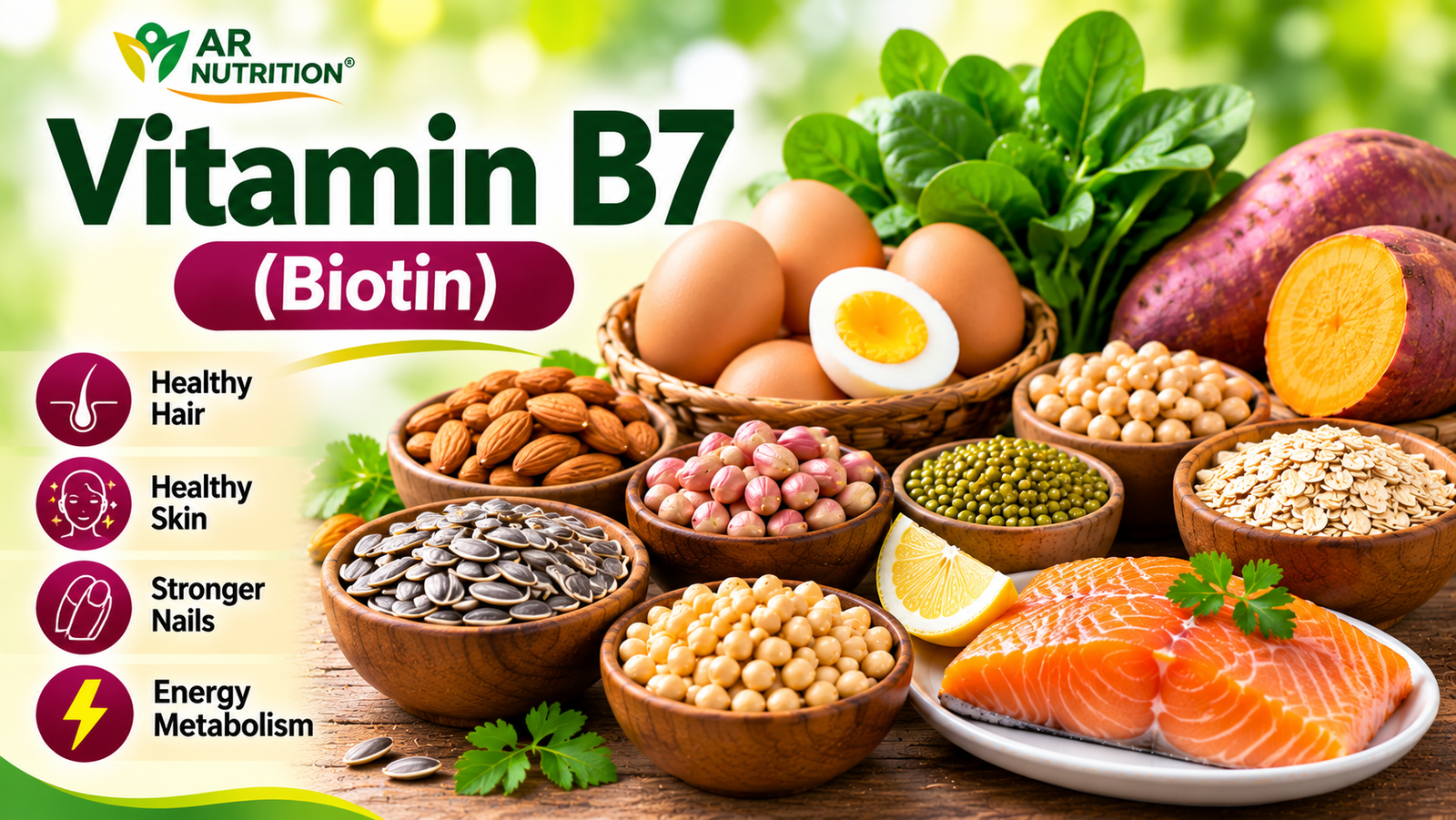
Vitamin B7, commonly known as biotin, is an essential water-soluble vitamin that belongs to the vitamin B complex family. It plays an important role in energy metabolism, helping the body convert carbohydrates, fats and proteins from food into usable energy.
Biotin also supports normal skin, hair and nail health. It helps several enzymes perform important metabolic reactions and contributes to the production of fatty acids and the processing of certain amino acids.
Biotin is naturally present in foods such as eggs, nuts, seeds, fish, meat, sweet potatoes and legumes. Although biotin deficiency is uncommon, certain medical conditions, genetic disorders and dietary habits may increase the risk.
In this article, we will explore vitamin B7 benefits, biotin-rich Indian foods, daily requirements, deficiency symptoms, supplements and precautions.
What Is Vitamin B7?
Vitamin B7 is a water-soluble vitamin also known as:
Biotin.
Vitamin H.
Coenzyme R.
Biotin acts as a coenzyme for several carboxylase enzymes involved in important metabolic processes.
These enzymes help the body:
Produce fatty acids.
Break down certain amino acids.
Support glucose production.
Process nutrients for energy.
Because biotin is water-soluble, the body does not store large amounts of it. Regular intake through a balanced diet helps maintain adequate levels.
Health Benefits of Vitamin B7
1. Supports Energy Metabolism
One of the main functions of biotin is to help the body use nutrients from food.
It supports enzymes involved in:
Carbohydrate metabolism.
Fat metabolism.
Protein metabolism.
Glucose production.
Biotin does not directly provide energy or calories. Instead, it helps enzymes carry out the reactions needed to release and use energy from food.
2. Supports Healthy Hair
Biotin is widely promoted in hair-care supplements because it contributes to normal cellular metabolism.
Severe biotin deficiency can cause hair thinning or hair loss. However, there is limited scientific evidence that biotin supplements improve hair growth in people who already have adequate biotin levels.
Hair loss can have many causes, including:
Iron deficiency.
Thyroid disorders.
Vitamin B12 deficiency.
Hormonal changes.
Stress.
Genetic factors.
Certain medical conditions.
If hair loss is persistent, identifying the underlying cause is more useful than taking high-dose biotin without testing or medical advice.
3. Helps Maintain Healthy Skin
Biotin participates in fatty acid metabolism and other processes that support normal skin function.
Severe biotin deficiency may cause skin problems, including scaly rashes around the eyes, nose and mouth.
However, taking extra biotin has not been proven to improve skin health in people who are not deficient.
4. Supports Nail Health
Biotin is often included in supplements marketed for brittle nails.
Some small studies suggest that high-dose biotin may improve nail thickness or strength in certain people with brittle nails. However, the evidence is limited, and more research is needed.
A balanced diet and evaluation of possible underlying causes are important when nails are persistently weak or brittle.
5. Supports Normal Brain and Nervous System Function
Biotin participates in several metabolic reactions that support normal cellular and nervous system function.
Severe deficiency may be associated with neurological symptoms such as:
Fatigue.
Depression or low mood.
Tingling sensations.
Confusion.
Unusual behavior.
These symptoms are not specific to biotin deficiency and require proper medical evaluation.
6. Supports Fatty Acid Production
Biotin is required by enzymes involved in fatty acid synthesis.
Fatty acids are important components of cell membranes and contribute to several normal body functions.
7. Helps Process Amino Acids
Biotin supports enzymes involved in the metabolism of certain amino acids, including leucine.
This contributes to the body's ability to process protein and maintain normal metabolic function.
Vitamin B7-Rich Foods in India
A varied diet can provide biotin through both plant-based and animal-based foods.
1. Eggs
Eggs are a useful source of biotin, particularly the yolk.
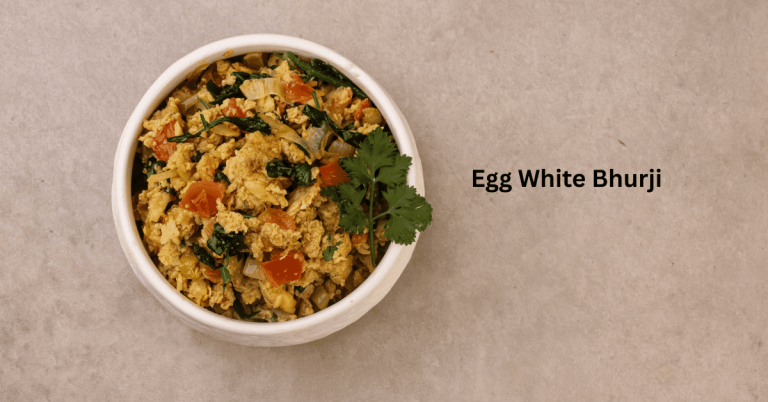
Important point: Raw egg whites contain a protein called avidin, which binds to biotin and can reduce its absorption when consumed regularly in large amounts. Cooking denatures avidin and reduces this effect.
2. Nuts and Seeds
Include:
Almonds.
Peanuts.
Walnuts.
Sunflower seeds.
Other mixed nuts and seeds.
They also provide healthy fats, protein, fiber and minerals.
3. Legumes and Pulses
Useful options include:
Soybeans.
Peanuts.
Lentils.
Chickpeas.
Green gram (moong).
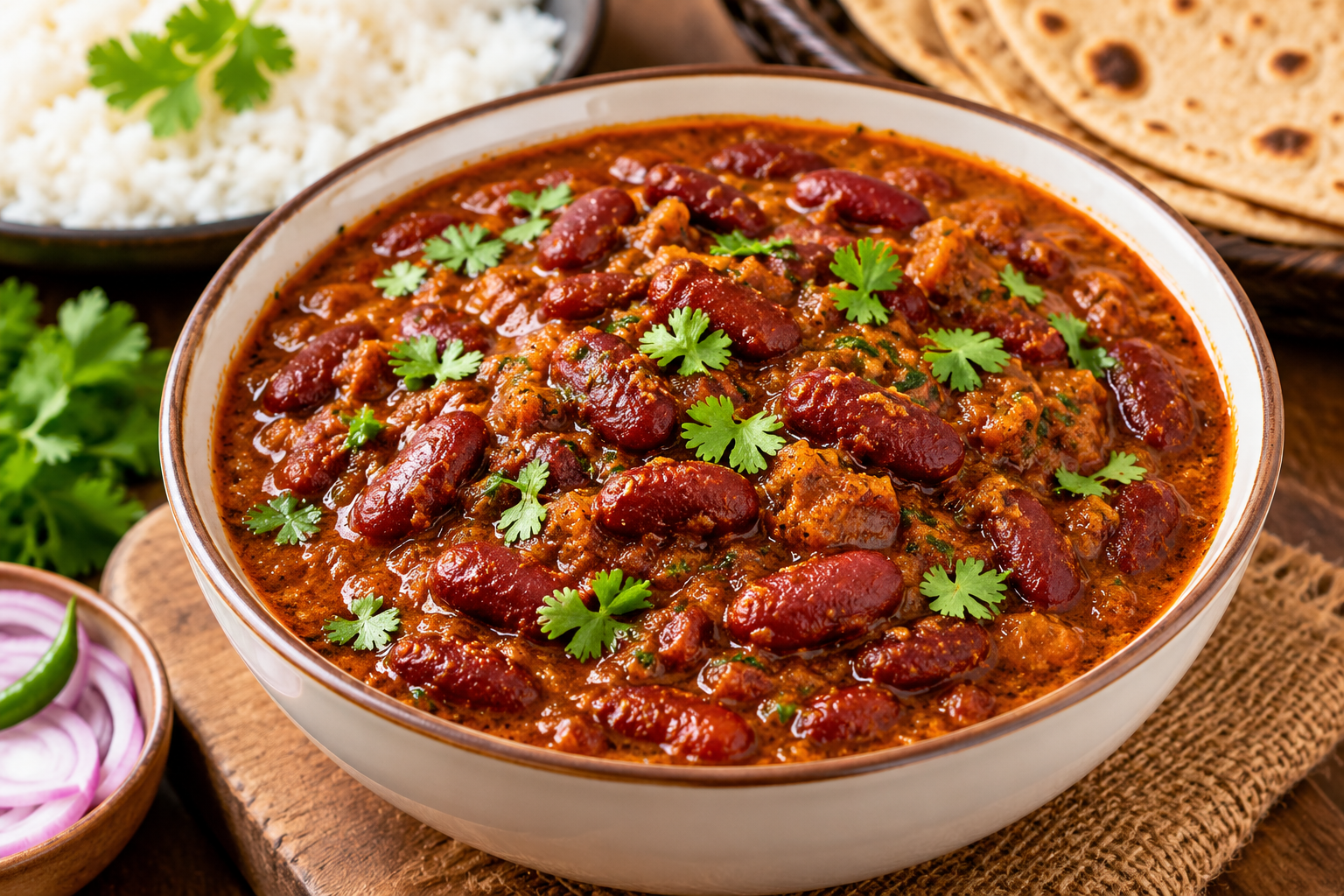
Kidney beans (rajma).
Pulses and legumes can contribute to overall biotin intake while also providing protein and fiber.
4. Vegetables
Some useful choices include:
Sweet potatoes.
Spinach.
Broccoli.
Cauliflower.
Mushrooms.
Sweet potatoes are a recognized food source of biotin.
5. Animal-Based Foods
For people who consume animal foods, options include:
Fish.
Chicken.
Meat.
Liver.
Eggs.
Organ meats can contain substantial amounts of biotin, although their nutrient content varies.
6. Whole Grains
Include:
Oats.
Whole wheat.
Brown rice.
Other whole grains.
These foods can contribute to a balanced diet and provide several other nutrients.
Selected Biotin Food Sources
The amount of biotin in foods varies with the food type, serving size and preparation method. Reliable biotin measurements are not available for every food.
Examples of foods recognized as biotin sources include:
| Food group | Examples |
|---|---|
| Eggs | Cooked whole egg |
| Nuts | Almonds, peanuts, walnuts |
| Seeds | Sunflower seeds |
| Legumes | Soybeans, chickpeas, lentils |
| Vegetables | Sweet potatoes, spinach, broccoli |
| Animal foods | Fish, meat, liver |
| Whole grains | Oats, whole wheat |
For exact food values, use a reliable food composition database rather than assuming all varieties contain the same amount.
Daily Requirement of Vitamin B7
The recommended amount of biotin depends on age and life stage.
The ICMR-NIN 2020 recommendations list an adult biotin intake of 30 micrograms (mcg) per day. The Indian recommendation is presented as a reference value for adults.
For comparison, the US National Institutes of Health reports the following Adequate Intakes (AI):
| Age or life stage | Biotin AI per day |
|---|---|
| Birth to 6 months | 5 mcg |
| 7â12 months | 6 mcg |
| 1â3 years | 8 mcg |
| 4â8 years | 12 mcg |
| 9â13 years | 20 mcg |
| 14â18 years | 25 mcg |
| Adults 19 years and above | 30 mcg |
| Pregnancy | 30 mcg |
| Breastfeeding | 35 mcg |
These are US AI values, not a replacement for Indian age-specific recommendations. AI means Adequate Intake; it is used when evidence is insufficient to establish a formal Recommended Dietary Allowance (RDA).
Vitamin B7 Deficiency
Biotin deficiency is uncommon in healthy people who eat a varied diet.
However, deficiency can occur due to certain genetic conditions, prolonged inadequate intake, malabsorption or other medical factors.
Common Symptoms of Biotin Deficiency
Possible symptoms include:
Hair thinning or hair loss.
Scaly skin rashes.
Rash around the eyes, nose and mouth.
Brittle nails.
Fatigue.
Low mood or depression.
Tingling sensations.
Neurological problems in severe cases.
Symptoms can vary from person to person. Hair loss or skin problems alone do not confirm biotin deficiency.
Causes of Vitamin B7 Deficiency
1. Genetic Biotinides Deficiency
Biotinides deficiency is a rare inherited disorder in which the body cannot efficiently recycle biotin. Without treatment, it can cause neurological and skin problems.
Early diagnosis and appropriate treatment are important.
2. Prolonged Consumption of Raw Egg Whites
Raw egg whites contain avidin, which binds biotin and reduces its absorption. Regularly consuming large quantities of raw egg whites over an extended period may increase deficiency risk.
Cooking eggs reduces avidin activity.
3. Certain Digestive Conditions
Some gastrointestinal conditions may interfere with nutrient absorption and contribute to poor biotin status.
4. Severe Dietary Restriction
A highly restrictive diet that lacks variety may increase the risk of multiple nutritional deficiencies, including biotin deficiency.
5. Certain Medications
Long-term use of some anti-seizure medicines may affect biotin levels. People taking these medicines should discuss nutritional monitoring with their healthcare professional.
How Is Vitamin B7 Deficiency Diagnosed?
Biotin deficiency is not diagnosed reliably from hair loss or skin symptoms alone.
A healthcare professional may consider:
Symptoms and medical history.
Dietary habits.
Medication use.
Family history of inherited metabolic disorders.
Specific biochemical investigations when appropriate.
There are limitations to available tests for assessing marginal biotin deficiency. Specialist evaluation may be needed when an inherited biotin-processing disorder is suspected.
Vitamin B7 Supplements: Uses and Precautions
Biotin supplements are commonly marketed for hair, skin and nails.
They are available as:
Biotin-only tablets.
Biotin capsules.
Vitamin B-complex supplements.
Multivitamin products.
Hair, skin and nail formulations.
Supplement doses can be much higher than the amount normally needed from food. Some products contain thousands of micrograms of biotin.
Supplements may be appropriate for diagnosed deficiency or specific medical conditions. However, routine high-dose supplementation is not necessary for most healthy people.
Important: Biotin Can Interfere with Blood Tests
One important safety issue is that high-dose biotin supplements can interfere with certain laboratory tests.
Depending on the test, results may appear falsely high or falsely low.
Tests that may be affected include some:
Thyroid hormone tests.
Hormone tests.
Vitamin D tests.
Cardiac troponin tests used in the assessment of heart problems.
This interference can lead to incorrect interpretation or delayed diagnosis.
If you take biotin supplements, inform your doctor and laboratory before undergoing blood tests. Do not stop prescribed treatment or decide on a supplement washout period without medical advice.
Can Biotin Help with Hair Growth?
Biotin is frequently advertised as a hair-growth vitamin. However, the evidence needs to be understood carefully.
Biotin deficiency can cause hair loss, and correcting a confirmed deficiency may help improve deficiency-related symptoms.
But in people with normal biotin levels, there is insufficient strong evidence that extra biotin improves hair growth.
If you experience excessive hair fall, a healthcare professional may consider possible causes such as:
Iron deficiency.
Thyroid disorders.
Vitamin B12 deficiency.
Protein or calorie inadequacy.
Hormonal conditions.
Scalp disorders.
Recent illness or physical stress.
The best treatment depends on the cause.
Sample Indian Diet Plan for Biotin
The following is an illustrative meal plan using common Indian foods. It is not a prescribed diet or a guarantee of a particular biotin intake.
| Meal | Food options |
|---|---|
| Early morning | Seasonal fruit |
| Breakfast | Vegetable poha with peanuts or cooked egg |
| Mid-morning | Banana or guava |
| Lunch | Roti or rice, dal, spinach and mixed vegetables |
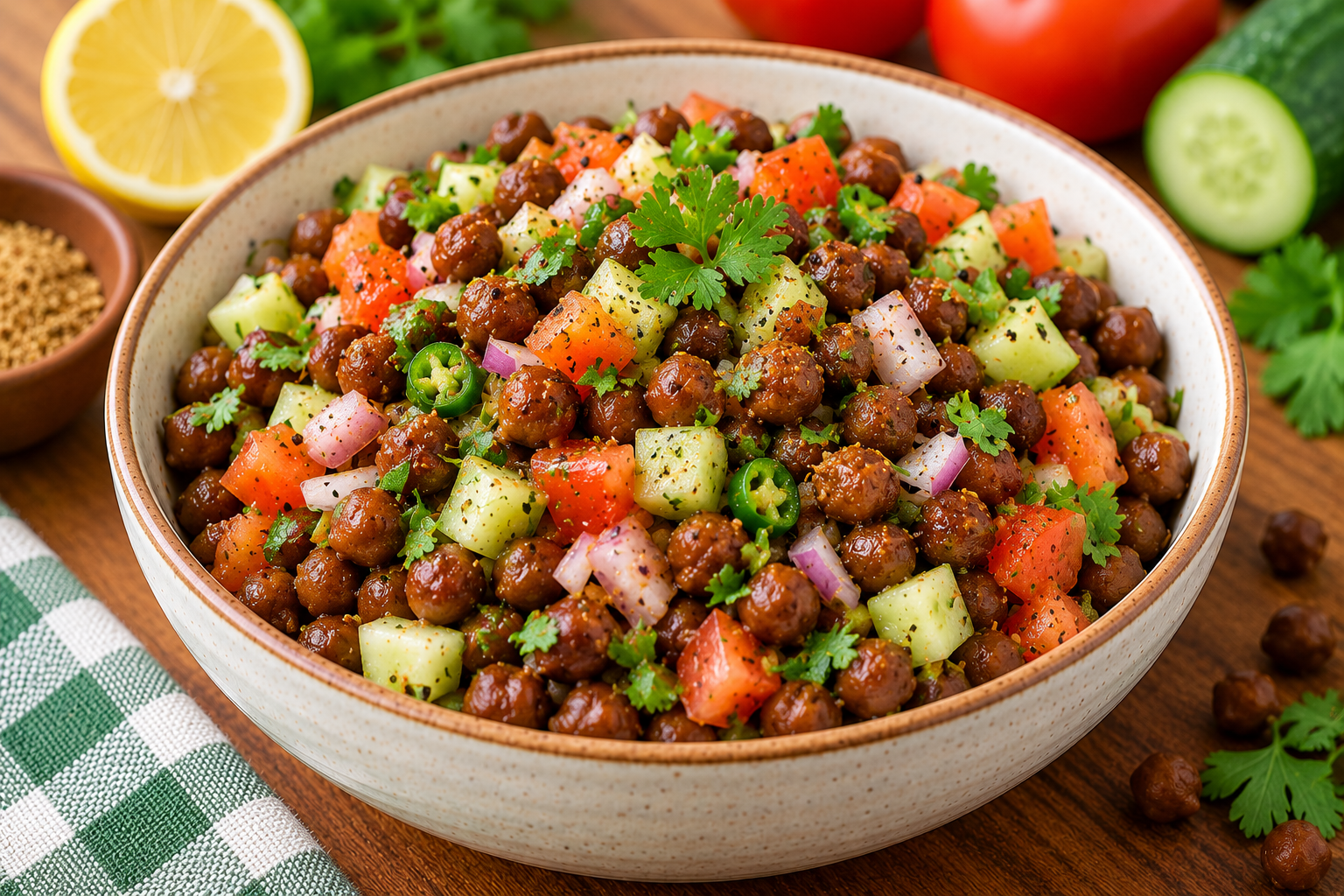
| Evening snack | Roasted chana and a small portion of nuts |
| Dinner | Roti, soybean curry or rajma and vegetables |
| Optional | Curd or milk according to individual needs |
Vegetarians can include legumes, nuts, seeds, vegetables and whole grains. People who eat animal foods can also include cooked eggs, fish or chicken.
Practical Tips to Maintain Healthy Biotin Levels
Eat a varied and balanced diet.
Include nuts and seeds regularly in appropriate portions.
Consume pulses and legumes.
Include vegetables such as sweet potatoes, spinach and broccoli.
Eat properly cooked eggs if they are part of your diet.
Avoid regularly consuming large quantities of raw egg whites.
Do not take high-dose biotin supplements without a clear reason.
Inform your healthcare professional about biotin supplements before blood tests.
Seek medical advice for persistent hair loss, skin rashes or brittle nails.
Follow medical guidance if you have a digestive or inherited metabolic condition.
Frequently Asked Questions (FAQs)
1. What is another name for vitamin B7?
Vitamin B7 is commonly known as biotin. It is also called vitamin H.
2. Which Indian foods are rich in biotin?
Useful food sources include cooked eggs, peanuts, almonds, sunflower seeds, soybeans, legumes, sweet potatoes, fish and meat.
3. Is biotin good for hair growth?
Biotin is important for normal metabolism and deficiency can cause hair loss. However, there is insufficient strong evidence that biotin supplements improve hair growth in people who are not deficient.
4. Can biotin improve skin health?
Biotin deficiency may cause certain skin rashes. However, extra biotin has not been proven to improve skin health in people with adequate levels.
5. Can vegetarians get enough biotin?
Yes. Vegetarians can obtain biotin from legumes, peanuts, nuts, seeds, sweet potatoes, spinach and whole grains through a varied diet.
6. What is the daily requirement of vitamin B7?
The ICMR-NIN 2020 adult reference intake is 30 mcg per day. Requirements for children and different life stages should be considered separately.
7. Does cooking destroy biotin in eggs?
Cooking may cause some nutrient losses, but it also reduces avidin activity in egg whites. Cooked eggs are a useful biotin source.
8. Can biotin deficiency cause hair fall?
Yes. Hair thinning or hair loss can occur in severe biotin deficiency, but hair fall has many other possible causes.
9. Is taking biotin every day safe?
Normal dietary intake is generally safe. High-dose supplements should be used only when appropriate, because they can interfere with certain laboratory tests.
10. Can biotin affect thyroid test results?
Yes. High-dose biotin can interfere with some thyroid laboratory tests and produce misleading results. Always inform your doctor and laboratory if you take biotin supplements.
Conclusion
Vitamin B7 (biotin) is an essential water-soluble vitamin that supports energy metabolism, fatty acid production, amino acid processing and normal cellular function. It is naturally present in foods such as eggs, nuts, seeds, legumes, sweet potatoes, fish and meat.
Biotin deficiency is uncommon, but certain genetic conditions, dietary restrictions and medications can increase the risk. Although biotin is widely marketed for hair, skin and nail health, strong evidence for extra supplementation in people without deficiency remains limited.
A varied diet is usually the best way to obtain biotin. Before taking high-dose supplements, seek professional advice, particularly because biotin can interfere with important blood tests.
Medical Disclaimer: This article is for general educational purposes and is not a substitute for medical diagnosis or treatment. Consult a qualified healthcare professional before starting biotin supplements, especially if you take regular medication or are planning laboratory tests.
References
ICMR-National Institute of Nutrition. Recommended Dietary Allowances and Estimated Average Requirements: Nutrient Requirements for Indians, 2020.
National Institutes of Health, Office of Dietary Supplements. Biotin: Fact Sheet for Health Professionals.
US Food and Drug Administration. Biotin Interference with Laboratory Tests.
Health Canada. Biotin and the Risk of False Lab Test Results.

💬 Comments (0)
Be respectful. Website links and phone numbers are not allowed.