

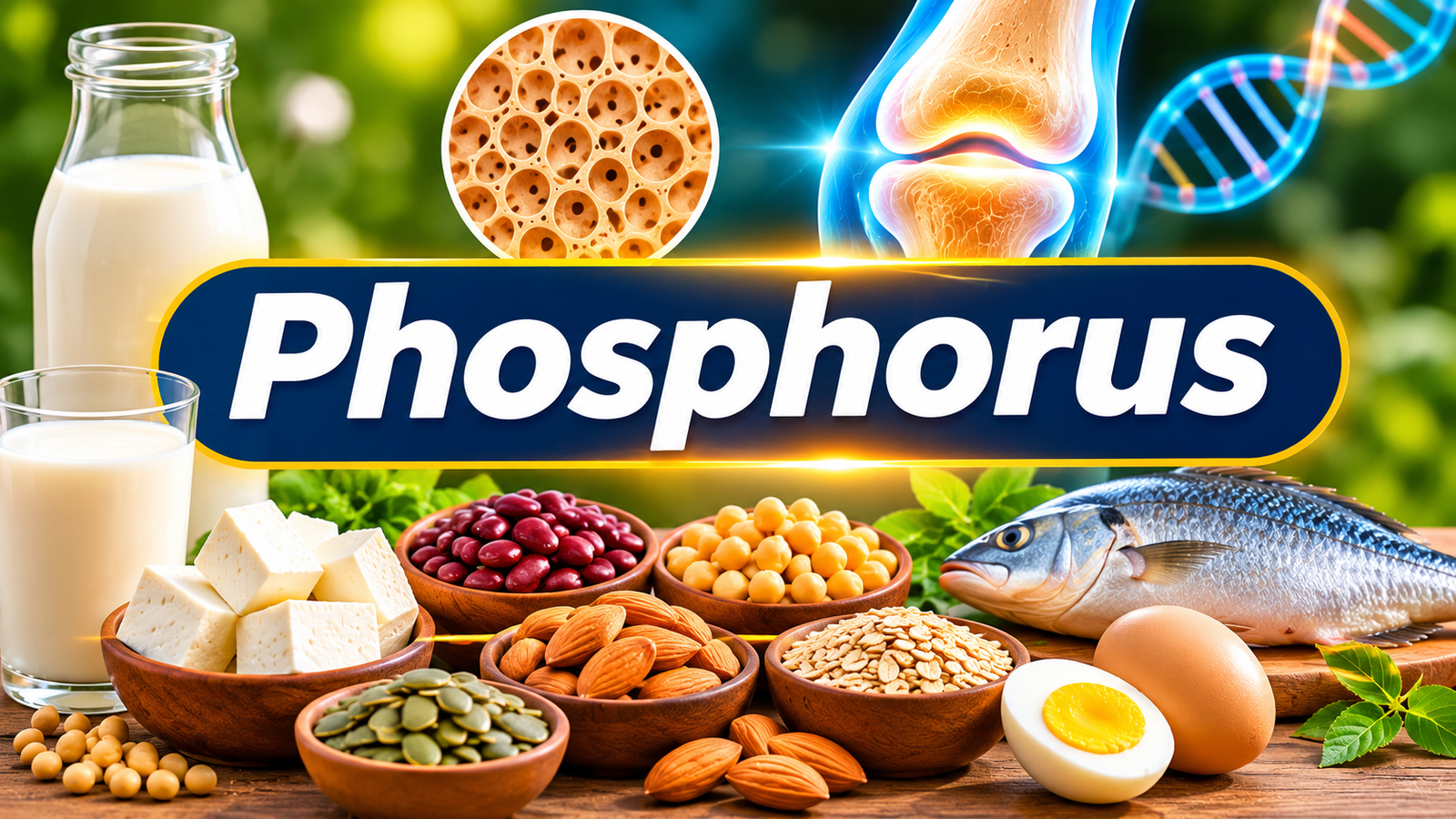
Phosphorus is an essential micromineral that plays a vital role in bone health, energy production, cell structure, muscle function and DNA formation. It is the second most abundant mineral in the human body after calcium.
Approximately 85% of the body's phosphorus is present in bones and teeth, while the remaining amount is distributed throughout cells and body fluids.
Although phosphorus is widely available in Indian foods such as milk, paneer, pulses, nuts, seeds, whole grains and soy products, maintaining an appropriate balance is important for overall health.
Both phosphorus deficiency and excessive phosphorus levels can affect normal body functions. People with chronic kidney disease may need particular attention to phosphorus intake because impaired kidneys cannot remove excess phosphorus efficiently.
This article explains the health benefits of phosphorus, its daily requirements, Indian food sources, deficiency symptoms, factors affecting absorption and practical ways to maintain healthy phosphorus levels.
1. What Is Phosphorus?
Phosphorus is an essential mineral required for several important physiological processes.
It is present in the body mainly in the form of phosphate, which combines with calcium to form hydroxyapatite, the mineral complex responsible for the strength and hardness of bones and teeth.
Phosphorus is also a component of:
ATP (adenosine triphosphate), the primary energy-carrying molecule in cells.
DNA and RNA, which carry genetic information.
Phospholipids, which form cell membranes.
Phosphorylated proteins involved in cellular signaling.
Several compounds involved in acid-base balance.
The body obtains phosphorus through food. Unlike some nutrients, phosphorus is present in a wide variety of animal and plant foods.
2. Health Benefits of Phosphorus
2.1 Supports Strong Bones and Teeth
One of the primary functions of phosphorus is maintaining bone and dental health.
Phosphorus combines with calcium to form hydroxyapatite crystals, which provide structural strength to bones and teeth.
Adequate phosphorus intake is essential for:
Normal bone development.
Bone mineralization.
Maintenance of skeletal structure.
Tooth development.
Normal bone remodeling.
Calcium and phosphorus work together to maintain skeletal health. An appropriate balance of both minerals is important.
2.2 Supports Energy Production
Phosphorus is essential for energy metabolism.
It forms part of ATP, which stores and transfers energy within cells.
ATP is required for numerous biological activities, including:
Muscle contraction.
Active transport of nutrients.
Nerve signaling.
Protein synthesis.
Cellular growth and repair.
Without adequate phosphorus, normal energy metabolism cannot function efficiently.
2.3 Maintains Healthy Cell Membranes
Phosphorus is an important component of phospholipids.
Phospholipids form the structural foundation of cell membranes, which separate the internal environment of cells from their surroundings.
These membranes regulate the movement of nutrients, electrolytes and other substances into and out of cells.
2.4 Supports DNA and RNA Formation
Phosphorus forms part of the sugar-phosphate backbone of DNA and RNA.
These molecules are essential for:
Genetic information storage.
Transmission of hereditary information.
Protein synthesis.
Cell division.
Normal growth and development.
Therefore, phosphorus is important for tissue growth and cellular repair.
2.5 Supports Muscle Function
Phosphorus participates in several processes required for normal muscle activity.
It is involved in ATP production, which supplies energy for muscle contraction and relaxation.
It also contributes to the regulation of muscle cell metabolism.
Severe phosphorus deficiency may cause muscle weakness and reduced physical performance.
2.6 Helps Maintain Acid-Base Balance
Phosphate acts as a buffer in the body.
It helps regulate the acid-base balance of intracellular fluids and contributes to acid excretion by the kidneys.
Maintaining normal acid-base balance is essential for enzyme activity and cellular function.
2.7 Supports Normal Nerve Function
Phosphorus contributes to nerve function through its involvement in cellular membranes, energy metabolism and intracellular signaling.
ATP is also required for maintaining the electrochemical gradients that allow nerve cells to transmit signals.
2.8 Supports Growth and Tissue Repair
Growing tissues require phosphorus for DNA formation, cell membranes and energy production.
Adequate phosphorus intake is therefore important during childhood, adolescence, pregnancy and other periods of increased tissue growth.
3. Daily Phosphorus Requirements
Phosphorus requirements vary according to age, growth, pregnancy and physiological conditions.
According to ICMR-NIN's 2020 recommendations, the adult phosphorus requirement is approximately 1,000 mg per day. The Indian recommendations relate phosphorus requirements to calcium requirements.
Population group | Approximate daily requirement |
|---|---|
Children 1-3 years | 500 mg |
Children 4-6 years | 550 mg |
Children 7-9 years | 650 mg |
Children 10-12 years | 850 mg |
Adolescents 13-15 years | 1,000 mg |
Adolescents 16-18 years | 1,050 mg |
Adult men | 1,000 mg |
Adult women | 1,000 mg |
Pregnancy | 1,000 mg |
Lactation | 1,200 mg |
Values are based on the ICMR-NIN 2020 approach. Individual requirements may differ depending on health status and clinical conditions.
Why Is Phosphorus Important During Growth?
Children and adolescents require phosphorus for:
Bone development.
Tooth mineralisation.
Cellular growth.
DNA formation.
Energy metabolism.
Adequate phosphorus intake, along with calcium, vitamin D and protein, supports normal skeletal development.
4. Best Phosphorus-Rich Foods in India
Phosphorus is present in a wide range of Indian foods. Both vegetarian and non-vegetarian diets can provide sufficient amounts.
A. Dairy Products
Dairy foods provide phosphorus along with calcium and protein.
Food | Approximate phosphorus per 100 g or ml |
|---|---|
Cow's milk (100 ml) | 90-100 mg |
Buffalo milk (100 ml) | 100-120 mg |
Curd (100 g) | 90-120 mg |
Paneer (100 g) | 250-300 mg |
Cheese (100 g) | 400-550 mg |
Values vary according to the product, preparation and moisture content.
How to include dairy in your diet:
Milk with breakfast.
Curd with lunch.
Paneer bhurji.
Vegetable raita.
Homemade yoghurt.
B. Pulses and Legumes
Pulses are important vegetarian sources of phosphorus, protein, fiber and other minerals.
Food | Approximate phosphorus per 100 g dry |
|---|---|
Soybeans | 600-700 mg |
Rajma | 350-450 mg |
Chickpeas | 300-400 mg |
Lentils | 300-400 mg |
Green gram | 300-350 mg |
Practical Indian preparations include:
Moong dal.
Masoor dal.
Chana masala.
Rajma curry.
Sprouted green gram.
Soybean curry.
These foods also contribute plant protein and dietary fiber.
C. Nuts and Seeds
Nuts and seeds are concentrated sources of phosphorus.
Food | Approximate phosphorus per 100 g |
|---|---|
Pumpkin seeds | 1,000-1,200 mg |
Sunflower seeds | 600-700 mg |
Sesame seeds | 600-650 mg |
Almonds | 450-500 mg |
Peanuts | 350-400 mg |
Cashews | 500-600 mg |
Walnuts | 300-350 mg |
Ways to include them:
Add pumpkin seeds to salads.
Use sesame seeds in chutneys.
Include almonds as a snack.
Add peanuts to poha and upma.
Use ground seeds in homemade chutneys.
Remember that nuts and seeds are energy-dense foods. Portion sizes should be considered when planning meals.
D. Whole Grains and Millets
Whole grains contain phosphorus, particularly in their outer layers and germ.
Food | Approximate phosphorus per 100 g dry |
|---|---|
Whole wheat | 300-350 mg |
Oats | 400-450 mg |
Brown rice | 250-300 mg |
Pearl millet (bajra) | 250-300 mg |
Ragi | 250-300 mg |
Jowar | 250-300 mg |
Indian meal options include:
Whole wheat roti.
Bajra roti.
Ragi dosa.
Jowar bhakri.
Oats porridge.
Brown rice.
However, phosphorus in many plant foods is partly present as phytate-bound phosphorus, which is less readily absorbed by humans.
E. Animal-Based Food Sources
For people who consume non-vegetarian foods, the following are useful phosphorus sources.
Food | Approximate phosphorus per 100 g |
|---|---|
Chicken | 180-220 mg |
Fish | 180-250 mg |
Egg | 180-200 mg |
Meat | 150-250 mg |
Fish, eggs, chicken and meat also provide high-quality protein.
F. Vegetables and Fruits
Most fruits and vegetables contain smaller amounts of phosphorus compared with dairy products, pulses, nuts and seeds.
Some sources include:
Potato.
Green peas.
Mushrooms.
Broccoli.
Cauliflower.
Banana.
They contribute to overall dietary phosphorus intake while providing fiber, vitamins and antioxidants.
5. Phosphorus Deficiency: Causes and Risk Factors
Phosphorus deficiency is known medically as hypophosphataemia when blood phosphate concentration becomes abnormally low.
It is relatively uncommon in healthy individuals consuming a balanced diet because phosphorus is widely available in foods.
However, deficiency can occur in certain medical and nutritional conditions.
Common Causes of Phosphorus Deficiency
1. Severe malnutrition
Prolonged inadequate food intake can reduce phosphorus availability.
2. Chronic alcohol misuse
Long-term excessive alcohol consumption may contribute to poor nutritional intake, gastrointestinal disturbances and abnormal phosphate balance.
3. Vitamin D deficiency
Vitamin D influences intestinal absorption of phosphorus and calcium. Severe deficiency can contribute to disturbances in mineral metabolism.
4. Malabsorption disorders
Conditions affecting nutrient absorption, such as coeliac disease and inflammatory bowel disease, may increase the risk of phosphate deficiency.
5. Certain medications
Some antacids containing aluminum or calcium can reduce phosphorus absorption. Certain other medicines can also affect phosphate balance.
6. Refeeding syndrome
When severely malnourished individuals begin receiving nutrition again, phosphorus can rapidly move from the blood into cells.
This may cause a significant fall in blood phosphate levels.
Refeeding syndrome is a potentially serious medical condition that requires professional monitoring.
7. Kidney-related conditions
Certain kidney disorders can cause excessive phosphate loss through urine.
8. Hormonal disturbances
Conditions involving parathyroid hormone and other regulatory hormones may alter phosphate metabolism and increase urinary phosphate loss.
6. Symptoms of Phosphorus Deficiency
Mild phosphorus deficiency may not produce noticeable symptoms.
Symptoms become more significant when blood phosphate levels fall substantially or remain low for a prolonged period.
6.1 Muscle Weakness
Phosphorus is required for ATP production.
Severe deficiency can reduce the availability of energy in muscle cells, resulting in muscle weakness.
6.2 Fatigue
Phosphorus participates in energy metabolism.
Very low phosphate levels may affect normal cellular energy production and contribute to tiredness and reduced physical performance.
6.3 Bone Pain
Prolonged phosphorus deficiency can impair bone mineralisation.
This may result in bone discomfort, skeletal weakness and, in severe cases, osteomalacia in adults.
6.4 Reduced Appetite
Severe phosphate disturbances may be associated with reduced appetite and general weakness.
However, loss of appetite is not a specific symptom of phosphorus deficiency.
6.5 Confusion and Neurological Problems
Severe hypophosphataemia can affect the nervous system.
Possible symptoms include:
Confusion.
Irritability.
Reduced alertness.
Seizures in severe cases.
6.6 Respiratory Muscle Weakness
Severe phosphorus deficiency can affect respiratory muscles.
In extreme cases, this may cause respiratory failure and require emergency medical treatment.
6.7 Rickets and Osteomalacia
Long-term disturbances in phosphorus metabolism can affect bone mineralization.
In children, severe phosphate deficiency may contribute to rickets, while adults may develop osteomalacia.
These conditions can cause bone pain, skeletal deformities or fractures.
Important: These symptoms are not specific to phosphorus deficiency. Diagnosis requires medical evaluation and appropriate blood testing.
7. Factors Affecting Phosphorus Absorption
Phosphorus absorption depends on the food source, digestive health, vitamin D status and other dietary components.
Understanding these factors helps explain why the phosphorus content of food does not always equal the amount absorbed by the body.
7.1 Vitamin D
Vitamin D helps regulate intestinal phosphorus absorption.
It supports the absorption of both calcium and phosphorus and contributes to normal bone mineralization.
Vitamin D deficiency may disturb mineral metabolism and negatively affect skeletal health.
7.2 Phytates
Phytates are naturally occurring compounds present in many plant foods.
They bind phosphorus and form phytate complexes, which humans cannot efficiently digest because they lack sufficient intestinal phytase activity.
Foods containing phytates include:
Whole wheat.
Ragi.
Bajra.
Chickpeas.
Rajma.
Soybeans.
Nuts.
Seeds.
As a result, phosphorus from many plant foods is less bioavailable than phosphorus from animal foods.
7.3 Food Processing
Food processing can influence phosphorus availability.
Some food additives contain inorganic phosphate, which is highly absorbable.
Examples include:
Phosphoric acid.
Sodium phosphate.
Potassium phosphate.
Sodium polyphosphate.
These ingredients may be used in processed foods, meat products, packaged beverages and processed cheese.
Reading ingredient labels can help identify added phosphate compounds.
7.4 Kidney Function
The kidneys play a major role in regulating phosphorus levels.
They remove excess phosphate through urine and help maintain mineral balance.
When kidney function declines, phosphate excretion may become impaired, resulting in increased blood phosphate levels.
People with chronic kidney disease may therefore need individualized phosphorus management.
7.5 Calcium Intake
Calcium and phosphorus are closely connected in the body.
They combine to form the mineral structure of bones and teeth.
Dietary calcium can also bind some phosphorus in the digestive tract, influencing its absorption.
Maintaining an appropriate balance of both minerals is important for skeletal health.
7.6 Age and Growth
Phosphorus requirements change during different stages of life.
Children and adolescents require adequate phosphorus to support bone growth and cellular development.
Older adults may have additional concerns related to kidney function, dietary intake and bone health.
7.7 Digestive Health
Healthy intestinal function is necessary for normal phosphorus absorption.
Certain gastrointestinal disorders and malabsorption conditions may reduce the availability of phosphorus and other essential nutrients.
8. Excess Phosphorus: Health Risks
Although phosphorus is essential, excessive phosphorus intake or impaired phosphate regulation can negatively affect health.
A condition involving elevated blood phosphate is known as hyperphosphatasemia.
Common Causes of High Phosphorus Levels
Chronic kidney disease.
Excessive use of phosphate-containing supplements.
Certain medications and phosphate preparations.
Severe tissue breakdown.
Some hormonal and metabolic disorders.
Possible Health Effects
1. Calcium imbalance
Elevated phosphate levels can disturb calcium and phosphate regulation.
2. Bone health problems
In chronic kidney disease, disturbances in calcium, phosphate, vitamin D and parathyroid hormone can contribute to renal bone disease.
3. Vascular calcification
In people with advanced kidney disease, abnormal mineral metabolism can contribute to calcium-phosphate deposition in blood vessels and other soft tissues.
4. Increased cardiovascular risk
High phosphate levels are associated with adverse cardiovascular outcomes in people with chronic kidney disease. This association should not be interpreted as proof that ordinary phosphorus intake causes cardiovascular disease in healthy people.
Phosphorus in Soft Drinks
Some cola beverages contain phosphoric acid, which contributes acidity and flavor.
Regular consumption of sugar-sweetened soft drinks may displace nutritious foods and contribute to excess sugar intake.
People with kidney disease may also need to consider phosphate additives in beverages and packaged foods.
9. How to Maintain Healthy Phosphorus Levels
A balanced dietary approach is generally sufficient for healthy individuals.
Practical recommendations include:
Include pulses and legumes regularly.
Consume adequate protein through dairy, soy, pulses, eggs or other suitable sources.
Include whole grains as part of a balanced diet.
Eat nuts and seeds in appropriate portions.
Maintain adequate vitamin D status.
Avoid unnecessary phosphorus supplements.
Limit excessive consumption of highly processed foods containing phosphate additives.
Maintain good kidney health through appropriate medical care.
Seek professional advice if you have chronic kidney disease or abnormal blood phosphate levels.
Important: People with chronic kidney disease should not independently eliminate all phosphorus-rich foods. Their dietary requirements depend on kidney function, blood phosphate levels, dialysis status and overall nutritional needs.
10. Phosphorus and Calcium: Why Is the Balance Important?
Calcium and phosphorus work together to maintain healthy bones and teeth.
Both minerals are required for hydroxyapatite formation, which gives the skeletal system its strength.
However, consuming adequate amounts of both minerals is important.
Calcium | Phosphorus |
|---|---|
Supports bone mineralization | Supports bone mineralization |
Required for muscle contraction | Required for ATP production |
Supports nerve signaling | Supports cellular energy metabolism |
Helps blood clotting | Supports DNA and RNA formation |
Important for dental health | Important for dental health |
An imbalance in calcium and phosphorus metabolism can affect bone health, particularly in people with kidney disorders.
For most healthy individuals, a varied diet containing dairy, pulses, vegetables, nuts and whole grains can provide both minerals.
11. How Is Phosphorus Deficiency Diagnosed?
Phosphorus deficiency cannot be reliably diagnosed from symptoms alone.
A healthcare professional may recommend the following investigations:
Test | Purpose |
|---|---|
Serum phosphate | Measures blood phosphate levels |
Serum calcium | Evaluates calcium balance |
Vitamin D (25-OH) | Assesses vitamin D status |
Kidney function tests | Evaluates kidney function |
Parathyroid hormone (PTH) | Helps assess mineral regulation |
Magnesium | Evaluates another important electrolyte |
A commonly used adult reference range for serum phosphate is approximately 2.5-4.5 mg/dL, although laboratory reference ranges may vary.
A blood phosphate result should always be interpreted alongside medical history, kidney function and other laboratory findings.
12. Frequently Asked Questions (FAQs)
1. What is the main function of phosphorus in the human body?
Phosphorus supports bone and teeth formation, energy production, cell membranes, DNA synthesis, muscle function and acid-base balance.
2. Which Indian foods are rich in phosphorus?
Milk, paneer, curd, soybeans, rajma, chickpeas, pumpkin seeds, sesame seeds, almonds, whole wheat and millets are useful sources.
3. How much phosphorus does an adult need daily?
According to ICMR-NIN 2020, the recommended phosphorus intake for Indian adults is approximately 1,000 mg per day.
4. Can vegetarians get enough phosphorus?
Yes. Dairy products, pulses, legumes, soybeans, nuts, seeds and whole grains can provide phosphorus in vegetarian diets.
5. Does phosphorus help build muscles?
Phosphorus contributes to ATP production, which provides energy for muscle contraction. However, phosphorus supplements are not a substitute for adequate protein, exercise and balanced nutrition.
6. What are the symptoms of phosphorus deficiency?
Severe deficiency may cause muscle weakness, fatigue, bone pain, reduced appetite, confusion and respiratory muscle weakness.
7. Does vitamin D help phosphorus absorption?
Yes. Vitamin D supports intestinal absorption of phosphorus and calcium and helps maintain normal mineral metabolism.
8. Is phosphorus present in milk?
Yes. Milk contains phosphorus along with calcium, protein and other essential nutrients.
9. Are phosphorus additives harmful?
Phosphate additives are permitted in specified food applications, but they can provide highly absorbable phosphorus. People with chronic kidney disease may need to limit them under professional dietary guidance.
10. Can excess phosphorus damage the kidneys?
Healthy kidneys regulate phosphorus excretion. However, people with impaired kidney function may accumulate excess phosphorus, making dietary management important.
11. Does phosphorus deficiency cause bone pain?
Severe or prolonged phosphate deficiency can impair bone mineralization and contribute to bone pain and skeletal weakness.
12. Is phosphorus supplementation necessary?
Most healthy people obtain sufficient phosphorus through their regular diet. Supplements are generally unnecessary unless recommended for a specific medical reason.
Conclusion
Phosphorus is an essential micromineral that supports bone and dental health, energy production, muscle contraction, nerve function, cell membranes and genetic material formation.
A balanced Indian diet containing milk, curd, paneer, pulses, soybeans, whole grains, nuts and seeds can generally provide sufficient phosphorus.
However, phosphorus balance is influenced by vitamin D, calcium intake, food processing, phytates, intestinal absorption and kidney function.
Both inadequate and excessive phosphorus levels can affect health. Therefore, maintaining an appropriate intake through a balanced diet is more beneficial than consuming unnecessary mineral supplements.
Remember: Good bone health requires more than calcium alone. Calcium, phosphorus, vitamin D, protein and regular physical activity all contribute to maintaining healthy bones.
References and further reading
ICMR-NIN, Nutrient Requirements for Indians: Recommended Dietary Allowances and Estimated Average Requirements, 2020.ICMR-NIN official publication.
NIH Office of Dietary Supplements, Phosphorus Fact Sheet for Health Professionals. Read phosphorus scientific fact sheet.
NIH Office of Dietary Supplements, Phosphorus Fact Sheet for Consumers. Read consumer guide.
ICMR-NIN, Indian Food Composition Tables 2017. NIN food composition resources.








💬 Comments (0)
Be respectful. Website links and phone numbers are not allowed.