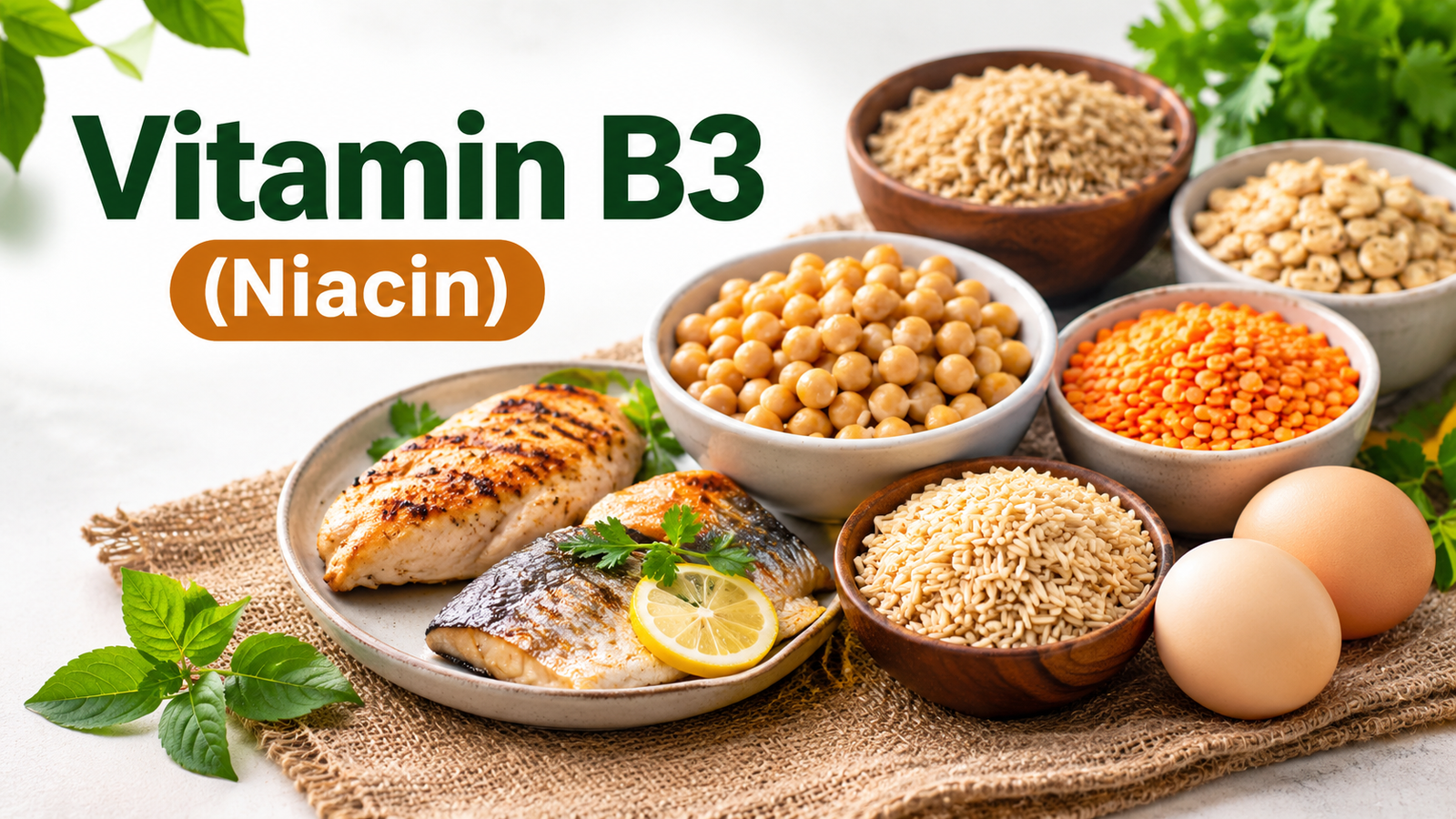
Vitamin B3, also known as niacin, is an essential water-soluble vitamin that plays an important role in energy production, brain function, skin health and normal cellular metabolism. It helps the body convert carbohydrates, proteins and fats from food into usable energy. Vitamin B3 also supports several important processes involved in maintaining healthy cells and tissues.
A balanced Indian diet containing whole grains, millets, pulses, nuts, seeds, milk, eggs, fish and poultry can help provide adequate vitamin B3. However, poor dietary diversity, chronic alcohol consumption, certain medical conditions and inadequate protein intake may increase the risk of niacin deficiency.
In this article, we will explore the health benefits of vitamin B3, its Indian food sources, recommended daily intake, deficiency symptoms and practical ways to prevent niacin deficiency.
Quick Summary: Vitamin B3 (Niacin)
Other name: Niacin or Vitamin B3
Vitamin category: Water-soluble B-complex vitamin
Active forms: Nicotinic acid and nicotinamide
Major functions: Energy metabolism, cellular function, skin health and nervous system function
Important coenzymes: NAD and NADP
Deficiency disease: Pellagra
Vegetarian sources: Groundnuts, whole grains, millets, pulses, mushrooms and seeds
Non-vegetarian sources: Chicken, fish and meat
1. What Is Vitamin B3 (Niacin)?
Vitamin B3 is a water-soluble vitamin belonging to the B-complex family. It is essential for several metabolic reactions that help the body function properly.
Niacin occurs mainly in two forms:
Nicotinic acid: A form of niacin found naturally in foods and dietary supplements.
Nicotinamide (Niacinamide): Another form that supports normal cellular metabolism and is commonly used in supplements and skincare products.
Both forms can be converted into important coenzymes known as NAD (Nicotinamide Adenine Dinucleotide) and NADP (Nicotinamide Adenine Dinucleotide Phosphate).
These coenzymes participate in hundreds of enzymatic reactions throughout the body.
Interestingly, the human body can also produce some niacin from an amino acid called tryptophan, which is found in protein rich foods.
Therefore, adequate protein intake is important for maintaining normal niacin status.
2. Health Benefits of Vitamin B3
Vitamin B3 supports several essential functions in the human body.
2.1 Supports Energy Production
One of the primary functions of vitamin B3 is helping the body produce energy from food.
When we consume carbohydrates, proteins and fats, the body breaks them down into smaller components. NAD and NADP participate in metabolic reactions that allow cells to use these nutrients.
Adequate niacin intake supports normal energy metabolism and cellular functioning.
However, taking additional niacin supplements does not automatically increase energy levels in people who already consume sufficient vitamin B3.
2.2 Supports Brain and Nervous System Function
Vitamin B3 is involved in several processes required for normal brain and nervous system function.
NAD-dependent reactions contribute to:
Normal cellular metabolism.
DNA repair processes.
Cellular communication.
Maintenance of healthy nerve cells.
Severe niacin deficiency can affect neurological function and may cause confusion, memory problems and behavioral changes.
2.3 Helps Maintain Healthy Skin
Vitamin B3 plays an important role in maintaining normal skin function.
Niacin deficiency can cause skin abnormalities, particularly in areas exposed to sunlight.
In severe deficiency, a condition called pellagra may develop. It can cause dark, rough and inflamed skin.
Nicotinamide is also widely used in skincare formulations, although topical skincare products and dietary niacin serve different purposes.
2.4 Supports Digestive System Function
Vitamin B3 contributes to normal cellular metabolism in the digestive tract.
Severe deficiency can affect the gastrointestinal system and may cause:
Diarrhea.
Loss of appetite.
Nausea.
Digestive discomfort.
Inflammation of the digestive tract.
Maintaining a balanced diet with adequate niacin and protein supports normal nutritional health.
2.5 Supports Cellular Health and DNA Repair
NAD is required by enzymes involved in DNA repair, gene regulation and cellular communication.
These processes are essential for maintaining normal cellular activity.
Vitamin B3 therefore contributes to several fundamental biological processes that support the health of different tissues and organs.
2.6 Supports Normal Metabolism
Niacin participates in the metabolism of carbohydrates, proteins and fats.
It helps enzymes carry out reactions involved in breaking down nutrients and producing energy.
A balanced diet containing adequate niacin, protein and other B-complex vitamins supports normal metabolic functioning.
Important: Although niacin has been studied for its effects on cholesterol, high-dose niacin supplements should not be used independently to manage cholesterol or triglycerides. Clinical evidence has not established routine high-dose niacin supplementation as a reliable way to prevent cardiovascular events.
3. Vitamin B3 Food Sources: Indian Diet
A variety of commonly available Indian foods can contribute to daily niacin intake.
3.1 Vegetarian Sources of Vitamin B3
Vegetarians can obtain vitamin B3 from several affordable foods.
| Food | How to include it |
|---|---|
| Groundnuts (peanuts) | Roasted peanuts or peanut chutney |
| Whole wheat | Chapati, roti and Dalia |
| Brown rice | Lunch or dinner |
| Millets | Ragi, jowar and bajra preparations |
| Chickpeas (chana) | Chana curry or boiled chana |
| Lentils (dal) | Masoor, moong and other dals |
| Soybeans | Soybean curry or soy chunks |
| Sunflower seeds | Add to salads or snacks |
| Pumpkin seeds | Include in breakfast or snacks |
| Mushrooms | Mushroom curry or stir-fry |
Groundnuts, whole grains, legumes and seeds are particularly useful additions to a varied vegetarian diet.
3.2 Non-Vegetarian Sources of Vitamin B3
Animal-based foods are generally good sources of readily available niacin.
Examples include:
Chicken.
Fish.
Tuna.
Salmon.
Lean meat.
Liver.
Including fish, eggs, chicken or other suitable protein sources can help improve overall dietary diversity.
3.3 Milk and Dairy Products
Milk, curd and other dairy products contain relatively small amounts of niacin.
They can contribute to overall nutritional intake, but should not be considered the primary sources of vitamin B3.
3.4 Fruits and Vegetables
Certain fruits and vegetables provide smaller amounts of niacin.
Examples include:
Potatoes.
Tomatoes.
Mushrooms.
Green peas.
Avocado.
Bananas.
Combining vegetables with whole grains and pulses can improve the nutritional quality of everyday Indian meals.
Note: The actual vitamin B3 content depends on food variety, portion size, processing, storage and cooking methods.
4. Recommended Daily Intake of Vitamin B3
The recommended intake of niacin varies according to age, sex, pregnancy, lactation and physical activity.
ICMR-NIN's 2020 nutrient recommendations provide the following reference values for adults according to work activity.
| Category | Niacin requirement |
|---|---|
| Adult men - sedentary | 14 mg/day |
| Adult men - moderate activity | 18 mg/day |
| Adult men - heavy activity | 23 mg/day |
| Adult women - sedentary | 11 mg/day |
| Adult women - moderate activity | 14 mg/day |
| Adult women - heavy activity | 18 mg/day |
These values are expressed as niacin equivalents (NE).
Niacin equivalents account for both niacin obtained directly from food and niacin produced from dietary tryptophan.
Individual requirements may differ depending on life stage and nutritional circumstances. Pregnant and breastfeeding women should follow appropriate life stage recommendations.
5. Vitamin B3 Deficiency: Causes and Risk Factors
Vitamin B3 deficiency occurs when the body does not receive or utilize enough niacin.
Severe deficiency can lead to pellagra, a nutritional disease that affects the skin, digestive system and nervous system.
Some common causes and risk factors include:
5.1 Poor Dietary Diversity
Consuming a very limited diet with insufficient protein, pulses, whole grains and other nutrient-rich foods may increase the risk of niacin inadequacy.
5.2 Chronic Alcohol Consumption
Long-term excessive alcohol consumption can contribute to poor dietary intake and nutritional deficiencies, including niacin deficiency.
5.3 Protein Deficiency
The body produces some niacin from tryptophan, an amino acid obtained from dietary protein.
Inadequate protein intake can therefore affect the body's ability to produce niacin.
5.4 Digestive Disorders
Certain gastrointestinal conditions can interfere with nutrient absorption and increase the risk of nutritional deficiencies.
5.5 Certain Medical Conditions
Conditions such as Hartnup disease and carcinoid syndrome can interfere with the availability or metabolism of tryptophan and increase the risk of niacin deficiency.
Some medications, including isoniazid used in tuberculosis treatment, may also interfere with niacin metabolism.
6. Symptoms of Vitamin B3 Deficiency
Severe niacin deficiency causes a condition called pellagra.
Traditionally, pellagra is associated with the four Ds:
Dermatitis.
Diarrhea.
Dementia.
Death.
The symptoms may progress if the deficiency remains untreated.
6.1 Dermatitis
Skin changes are among the characteristic signs of pellagra.
Symptoms may include:
Dark or pigmented skin.
Rough and inflamed skin.
Sun-sensitive skin.
Redness and irritation.
Skin changes around the neck, hands and face.
The affected areas are often exposed to sunlight.
6.2 Diarrhea and Digestive Problems
Niacin deficiency can affect the gastrointestinal system.
Possible symptoms include:
Persistent diarrhea.
Nausea.
Vomiting.
Reduced appetite.
Digestive discomfort.
6.3 Neurological Symptoms
Severe deficiency can affect the nervous system.
Symptoms may include:
Confusion.
Memory problems.
Depression.
Irritability.
Headaches.
Difficulty concentrating.
Changes in behavior.
Advanced untreated pellagra can cause serious neurological complications.
6.4 General Weakness and Fatigue
People with inadequate nutritional intake may experience weakness, reduced appetite and fatigue.
However, fatigue alone does not confirm vitamin B3 deficiency. Several other nutritional and medical conditions can cause similar symptoms.
7. How to Prevent Vitamin B3 Deficiency
The best approach to preventing niacin deficiency is consuming a balanced diet containing different food groups.
Here are practical dietary strategies for Indian households.
7.1 Include Whole Grains
Choose a variety of cereals and millets.
Examples include:
Whole wheat roti.
Brown rice.
Bajra roti.
Jowar roti.
Ragi preparations.
Whole grains can contribute niacin and other important nutrients.
7.2 Consume Pulses Regularly
Include different pulses in your daily meals.
Examples:
Moong dal.
Masoor dal.
Chana dal.
Rajma.
Chickpeas.
Soybeans.
Combining cereals and pulses also helps improve the overall protein quality of vegetarian meals.
7.3 Include Nuts and Seeds
Groundnuts, sunflower seeds and pumpkin seeds can be included in moderate quantities.
They provide several nutrients, including healthy fats, protein and niacin.
7.4 Eat Adequate Protein
Protein-rich foods supply tryptophan, which the body can use to produce niacin.
Suitable options include:
Dal and legumes.
Soy products.
Milk and curd.
Eggs.
Fish.
Chicken.
7.5 Follow a Diverse Diet
Avoid depending on only one staple food.
A varied diet containing cereals, pulses, vegetables, fruits, nuts, seeds and suitable protein sources helps reduce the risk of multiple nutrient deficiencies.
8. Sample Indian Diet Plan for Vitamin B3 Intake
The following is an illustrative meal pattern using commonly available Indian foods. It is not a therapeutic diet or a guaranteed niacin requirement plan.
| Meal | Suggested food options |
|---|---|
| Early morning | Water and a small handful of roasted groundnuts |
| Breakfast | Vegetable poha with peanuts |
| Mid-morning | Banana or seasonal fruit |
| Lunch | Whole wheat roti, dal, vegetables and curd |
| Evening snack | Roasted chana or sprouts |
| Dinner | Brown rice or roti with rajma, chana or soybean curry |
| Optional protein choice | Fish, chicken or eggs, according to dietary preference |
The overall nutritional adequacy of the diet depends on portion sizes, individual energy needs and the variety of foods consumed.
9. Can Vitamin B3 Supplements Be Taken Daily?
Vitamin B3 supplements are available in different forms, including nicotinic acid and nicotinamide.
They may be recommended by healthcare professionals in certain situations, such as confirmed deficiency or specific medical conditions.
However, taking high doses without medical supervision is not recommended.
Excessive supplemental niacin can cause:
Skin flushing.
Itching.
Headaches.
Nausea.
Gastrointestinal discomfort.
Liver toxicity at high doses.
Changes in blood glucose levels.
High-dose niacin may also interact with certain medications.
People taking diabetes medications or medicines for cholesterol should consult their doctor before using niacin supplements.
Importantly, nutritional doses and high-dose therapeutic niacin are not the same.
Do not use niacin supplements as a self-treatment for high cholesterol or triglycerides.
10. Who Is at Higher Risk of Vitamin B3 Deficiency?
Certain individuals may require additional nutritional assessment.
These include:
People with poor dietary intake.
Individuals with chronic alcohol use.
People experiencing severe undernutrition.
Individuals with certain gastrointestinal disorders.
People with Hartnup disease.
Individuals with carcinoid syndrome.
People taking certain medications that interfere with niacin metabolism.
If someone experiences persistent skin changes, digestive problems or neurological symptoms, medical evaluation is important.
11. Frequently Asked Questions About Vitamin B3
Q1. What is another name for vitamin B3?
Vitamin B3 is also known as niacin. Its two main forms are nicotinic acid and nicotinamide.
Q2. Which Indian foods are rich in vitamin B3?
Groundnuts, whole grains, millets, pulses, soybeans, sunflower seeds, chicken and fish are useful dietary sources.
Q3. What disease is caused by vitamin B3 deficiency?
Severe vitamin B3 deficiency causes pellagra, which can affect the skin, digestive system and nervous system.
Q4. Does vitamin B3 help with skin health?
Yes. Niacin is required for normal cellular and skin function. Severe deficiency can cause characteristic skin abnormalities.
Q5. Can vegetarians get enough vitamin B3?
Yes. Vegetarians can obtain niacin from groundnuts, whole grains, millets, legumes, soybeans, mushrooms and seeds. Adequate protein intake is also important because tryptophan can be converted into niacin.
Q6. Is vitamin B3 good for cholesterol?
Pharmacological doses of nicotinic acid can change cholesterol and triglyceride levels, but clinical trials have not demonstrated consistent cardiovascular benefits from routine high-dose niacin treatment. It should only be used for a medical indication under professional supervision.
Q7. Can vitamin B3 deficiency cause diarrhea?
Yes. Severe niacin deficiency can cause gastrointestinal symptoms, including diarrhea, as part of pellagra.
Q8. Is vitamin B3 water-soluble?
Yes. Vitamin B3 is water-soluble and excess amounts are metabolized and excreted through urine.
Conclusion
Vitamin B3 (niacin) is an essential nutrient that supports energy metabolism, nervous system function, skin health and normal cellular processes.
Indian diets can provide adequate niacin through a combination of whole grains, millets, pulses, groundnuts, seeds and suitable animal-based foods.
Maintaining adequate protein intake and dietary diversity is particularly important because the body can also produce niacin from tryptophan.
Severe vitamin B3 deficiency can cause pellagra, a serious nutritional condition that requires medical treatment.
Instead of taking high-dose supplements without guidance, focus on a balanced diet and seek professional advice if symptoms suggest a nutritional deficiency.
Healthy eating is not about consuming one special food. It is about maintaining a balanced and diverse diet every day.
References and Scientific Sources
ICMR-National Institute of Nutrition. Nutrient Requirements for Indians: Recommended Dietary Allowances and Estimated Average Requirements, 2020.
ICMR-NIN. Dietary Guidelines for Indians, 2024.
National Institutes of Health, Office of Dietary Supplements. Niacin: Fact Sheet for Health Professionals.
World Health Organization. Pellagra and Its Prevention and Control in Major Emergencies.
Medical Disclaimer: This article is intended for general educational purposes. It does not replace individual medical or dietetic advice, diagnosis or treatment. Consult a qualified healthcare professional before taking high dose vitamin supplements.



💬 Comments (0)
Be respectful. Website links and phone numbers are not allowed.