
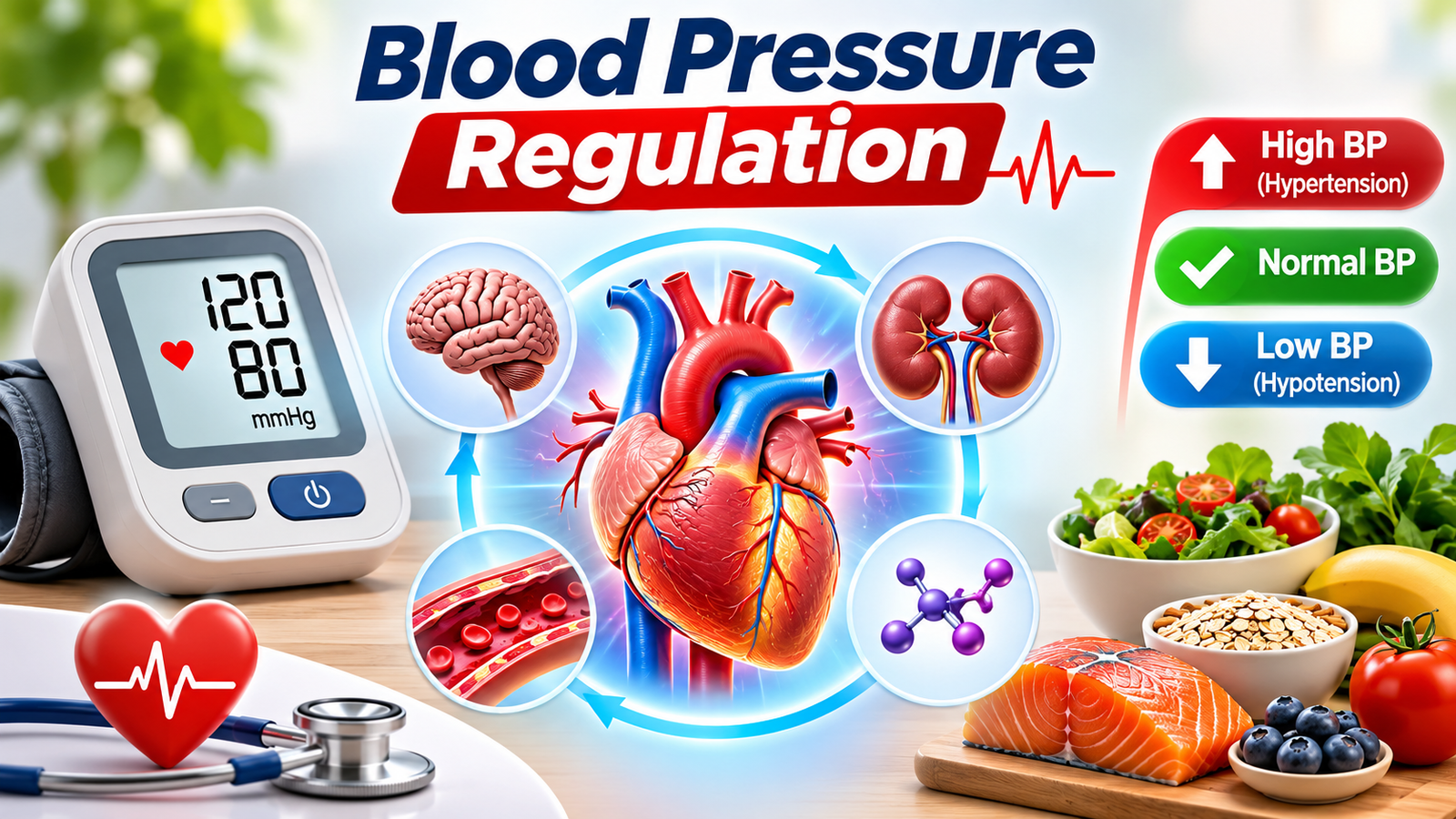
Blood pressure is one of the most important indicators of cardiovascular health. It represents the force exerted by circulating blood against the walls of arteries. Maintaining appropriate blood pressure is essential for delivering oxygen and nutrients to organs and tissues.
The human body continuously regulates blood pressure according to its needs. During exercise, blood pressure may change to support increased blood flow to working muscles. During rest or sleep, cardiovascular activity generally decreases.
Blood pressure regulation involves several organs and systems, particularly the heart, blood vessels, kidneys, nervous system and endocrine system.
When blood pressure remains persistently elevated, it is known as hypertension. When it becomes unusually low and causes inadequate tissue perfusion or symptoms, it may be described as hypotension.
Understanding blood pressure regulation is important for preventing cardiovascular complications and supporting long-term health.
1. What Is Blood Pressure?
Blood pressure is the pressure exerted by circulating blood on the walls of arteries.
It is usually measured in millimeters of mercury (mmHg).
A blood pressure reading contains two values:
Systolic blood pressure.
Diastolic blood pressure.
For example, a reading of 120/80 mmHg means:
Systolic pressure: 120 mmHg.
Diastolic pressure: 80 mmHg.
A. Systolic Blood Pressure
Systolic blood pressure is the pressure in the arteries when the ventricles contract and eject blood into circulation.
It is the upper number in a blood pressure reading.
B. Diastolic Blood Pressure
Diastolic blood pressure is the pressure in the arteries when the ventricles relax between contractions.
It is the lower number in a blood pressure reading.
Both values are important when evaluating cardiovascular health.
2. What Determines Blood Pressure?
Blood pressure is influenced mainly by cardiac output and systemic vascular resistance.
A simplified physiological relationship is:
Mean arterial pressure = Cardiac output à Systemic vascular resistance
A. Cardiac Output
Cardiac output is the volume of blood pumped by one ventricle per minute.
It depends on:
Heart rate.
Stroke volume.
Formula:
Cardiac output = Heart rate * Stroke volume
For example:
Heart rate = 70 beats/minute.
Stroke volume = 70 mL/beat.
Cardiac output = 70 * 70 = 4,900 mL/minute, or 4.9 L/minute.
An increase in cardiac output can increase blood pressure if other factors remain unchanged.
B. Systemic Vascular Resistance
Systemic vascular resistance refers to the resistance blood encounters as it flows through the systemic circulation.
It is strongly influenced by the diameter of small arteries and arterioles.
Vasoconstriction: Narrowing of blood vessels increases resistance.
Vasodilation: Widening of blood vessels decreases resistance.
Small changes in arteriolar diameter can have substantial effects on vascular resistance.
C. Blood Volume
Blood volume influences venous return, cardiac filling and cardiac output.
An increase in circulating blood volume may increase blood pressure, while significant fluid loss may reduce it.
D. Arterial Elasticity
Healthy arteries expand when the heart ejects blood and recoil between heartbeats.
Reduced arterial elasticity, which can occur with ageing and vascular disease, may contribute to increased systolic blood pressure.
E. Blood Viscosity
Blood viscosity refers to its resistance to flow.
Changes in red blood cell concentration and other blood components can influence viscosity and circulation.
3. How Is Blood Pressure Measured?
Blood pressure is commonly measured using a device called a sphygmomanometer.
Measurements may be obtained using:
Manual mercury or aneroid devices.
Validated automatic digital monitors.
Clinical blood pressure monitoring equipment.
Correct Blood Pressure Measurement Technique
For a more reliable reading:
Avoid smoking, caffeine and exercise for at least 30 minutes beforehand.
Empty the bladder if needed.
Sit quietly for approximately five minutes.
Keep the back supported.
Place both feet flat on the floor.
Keep the legs uncrossed.
Support the arm at heart level.
Use an appropriately sized cuff on a bare upper arm.
Avoid talking during measurement.
Take at least two readings, about one minute apart, when following a home-monitoring protocol.
A single reading may not accurately represent a person's usual blood pressure.
Repeated measurements on different occasions, and sometimes home or ambulatory monitoring, help confirm the diagnosis.
4. Blood Pressure Categories
Blood pressure categories vary across clinical guidelines and countries. The following table illustrates commonly used adult categories from the American Heart Association framework.
| Category | Systolic (mmHg) | Diastolic (mmHg) |
|---|---|---|
| Normal | Below 120 | And below 80 |
| Elevated | 120-129 | And below 80 |
| Stage 1 hypertension | 130-139 | Or 80-89 |
| Stage 2 hypertension | 140 or higher | Or 90 or higher |
| Severe hypertension range | Higher than 180 | And/or higher than 120 |
These categories are not identical to all national guidelines. Diagnosis should follow the applicable clinical guideline and consider repeated measurements and individual risk.
In particular, the presence of a systolic or diastolic value in a higher category can determine the overall category.
5. Short-Term Regulation of Blood Pressure
The body uses rapid mechanisms to adjust blood pressure within seconds or minutes.
The nervous system plays a major role in this process.
A. Baroreceptor Reflex
Baroreceptors are specialised stretch-sensitive receptors that detect changes in arterial pressure.
They are mainly located in:
Carotid sinus.
Aortic arch.
When Blood Pressure Increases
Arterial walls stretch more.
Baroreceptors increase their firing rate.
Signals travel to cardiovascular centres in the brainstem.
Sympathetic activity decreases.
Parasympathetic influence increases.
Heart rate and cardiac contractility may decrease.
Blood pressure moves towards its previous level.
When Blood Pressure Decreases
Arterial stretch decreases.
Baroreceptor firing decreases.
Sympathetic activity increases.
Heart rate and cardiac contractility increase.
Blood vessels constrict in many vascular beds.
Blood pressure is supported.
The baroreceptor reflex is particularly important for rapid adjustments when changing posture.
B. Chemoreceptor Reflex
Chemoreceptors detect changes in oxygen, carbon dioxide and blood pH.
Peripheral chemoreceptors are located mainly in the carotid and aortic bodies.
When oxygen becomes significantly low, carbon dioxide rises or blood pH falls, chemoreceptor responses can influence breathing and cardiovascular activity.
C. Autonomic Nervous System
The autonomic nervous system regulates heart rate, contractility and vascular tone.
Sympathetic nervous system:
Increases heart rate.
Increases cardiac contractility.
Promotes vasoconstriction in many blood vessels.
Supports blood pressure during stress or activity.
Parasympathetic nervous system:
Reduces heart rate, mainly through the vagus nerve.
Influences cardiovascular activity during rest.
The two divisions work together to regulate cardiovascular function.
6. Long-Term Regulation of Blood Pressure
Long-term blood pressure regulation depends substantially on the kidneys and hormonal mechanisms.
The kidneys regulate sodium and water balance, which influences blood volume.
A. Renin-Angiotensin-Aldosterone System (RAAS)
The renin-angiotensin-aldosterone system is one of the most important hormonal mechanisms involved in blood pressure regulation.
It becomes activated when the kidneys detect reduced renal perfusion, reduced sodium chloride delivery to the macula densa or increased sympathetic stimulation through beta-1 receptors.
Steps of RAAS Activation
Step 1: Renin release
Specialised cells in the kidneys release renin.
Step 2: Angiotensinogen conversion
Renin converts angiotensinogen, a protein produced by the liver, into angiotensin I.
Step 3: Angiotensin II formation
Angiotensin-converting enzyme (ACE), found in several tissues including the pulmonary vascular endothelium, converts angiotensin I into angiotensin II.
Step 4: Vasoconstriction
Angiotensin II causes blood vessels to constrict, increasing vascular resistance.
Step 5: Aldosterone release
Angiotensin II stimulates the adrenal cortex to release aldosterone.
Step 6: Sodium and water retention
Aldosterone promotes sodium reabsorption in the kidneys. Water may follow sodium, increasing extracellular fluid volume.
Step 7: Blood pressure support
The combined effects on vascular resistance and fluid balance help restore blood pressure.
B. Antidiuretic Hormone (ADH)
ADH, also called vasopressin, is produced in the hypothalamus and released by the posterior pituitary.
It helps regulate water balance by increasing water reabsorption in the kidney collecting ducts.
At higher concentrations, it can also cause vasoconstriction.
C. Atrial Natriuretic Peptide (ANP)
ANP is released by the atria of the heart when they are stretched by increased blood volume.
It helps lower blood volume and pressure by:
Promoting sodium excretion.
Increasing water excretion.
Inhibiting aspects of the renin-angiotensin-aldosterone system.
Promoting vasodilation in certain circumstances.
D. Kidney Regulation of Sodium and Water
The kidneys regulate blood volume through filtration, reabsorption and excretion.
When the body retains more sodium and water, extracellular fluid volume can increase.
When excess sodium and water are excreted, blood volume may decrease.
This renal regulation is central to long-term blood pressure control.
7. Local Regulation of Blood Flow
Individual tissues can adjust their blood supply according to metabolic requirements.
For example, active skeletal muscles require more oxygen and nutrients during exercise.
Local signals can promote vasodilation and increase blood flow.
Important local regulators include:
Nitric oxide.
Adenosine.
Carbon dioxide.
Hydrogen ions.
Potassium ions.
Other metabolic and endothelial signals.
The endothelium, the inner lining of blood vessels, plays an important role in controlling vascular tone.
8. What Is Hypertension?
Hypertension is persistently elevated arterial blood pressure.
It is often called a silent condition because many people have no obvious symptoms even when their blood pressure is high.
Long-term uncontrolled hypertension can damage blood vessels and increase the risk of cardiovascular and kidney diseases.
Types of Hypertension
A. Primary (Essential) Hypertension
Primary hypertension is high blood pressure without one identifiable underlying cause.
It develops through a combination of genetic, environmental, vascular, hormonal and lifestyle factors.
Contributing factors may include:
Family history.
Ageing.
High sodium intake.
Excess body weight.
Physical inactivity.
Alcohol consumption.
Poor sleep.
Chronic kidney or metabolic influences.
B. Secondary Hypertension
Secondary hypertension occurs due to an identifiable underlying condition or substance.
Possible causes include:
Kidney disease.
Renal artery stenosis.
Primary aldosteronism.
Obstructive sleep apnoea.
Thyroid disorders.
Certain adrenal conditions.
Some prescription medicines.
Certain non-prescription medicines and substances.
Identifying the underlying cause can be important because treatment may differ.
9. Risk Factors for Hypertension
Several factors can increase the likelihood of developing high blood pressure.
Non-Modifiable Factors
Increasing age.
Family history.
Genetic susceptibility.
Certain congenital or inherited conditions.
Modifiable Factors
Excessive sodium intake.
Low dietary potassium intake.
Physical inactivity.
Overweight and obesity.
Smoking and tobacco use.
Excessive alcohol consumption.
Poor sleep.
Chronic stress.
Unhealthy dietary patterns.
Not every person with hypertension has these risk factors, and the condition can occur in people with otherwise healthy lifestyles.
10. Symptoms and Complications of Hypertension
Most people with hypertension do not experience noticeable symptoms.
When blood pressure is very high or complications develop, symptoms may include:
Severe headache.
Chest pain.
Breathlessness.
Visual disturbances.
Confusion.
Neurological symptoms.
Symptoms alone cannot reliably diagnose hypertension.
Possible Long-Term Complications
1. Heart disease: Increased workload can contribute to left ventricular hypertrophy and heart failure.
2. Stroke: Hypertension increases the risk of both ischaemic and haemorrhagic stroke.
3. Kidney disease: Persistent high pressure can damage kidney blood vessels and filtering structures.
4. Retinal damage: Hypertension can affect the small blood vessels in the retina.
5. Peripheral arterial disease: Vascular damage can affect circulation to the limbs.
6. Cognitive impairment: Long-term vascular injury may contribute to cognitive decline.
11. What Is Hypotension?
Hypotension refers to blood pressure that is lower than expected.
A reading below 90/60 mmHg is commonly used as a reference for low blood pressure, but this number alone does not establish a medical problem.
Some healthy individuals naturally have lower blood pressure without symptoms.
Concern increases when low blood pressure causes symptoms or inadequate blood supply to vital organs.
Common Symptoms
Dizziness.
Light-headedness.
Blurred vision.
Weakness.
Nausea.
Fainting.
Confusion in severe cases.
Causes of Hypotension
Dehydration.
Blood loss.
Severe infection.
Certain medications.
Heart rhythm disorders.
Heart failure.
Endocrine disorders.
Nutritional deficiencies in some circumstances.
Prolonged bed rest.
Types of Hypotension
A. Orthostatic Hypotension
A significant fall in blood pressure after standing from a sitting or lying position.
It may cause dizziness, blurred vision or fainting.
B. Postprandial Hypotension
A fall in blood pressure after eating, particularly in some older adults.
C. Neurally Mediated Hypotension
A reflex-related fall in blood pressure that can occur during prolonged standing or in response to certain triggers.
D. Shock-Related Hypotension
Severe low blood pressure associated with inadequate tissue perfusion. Causes include major blood loss, severe infection and serious allergic reactions.
Shock is a medical emergency.
12. Hypertension vs Hypotension
| Feature | Hypertension | Hypotension |
|---|---|---|
| Meaning | Persistently elevated blood pressure | Lower-than-expected blood pressure |
| Common reference | Guideline-dependent | Often below 90/60 mmHg |
| Symptoms | Frequently absent | Dizziness or fainting may occur |
| Major concern | Long-term vascular and organ damage | Inadequate tissue perfusion |
| Possible causes | Genetic, lifestyle, kidney and hormonal factors | Dehydration, blood loss, medicines and other conditions |
| Management | Lifestyle measures and prescribed medicines | Depends on cause and symptoms |
13. Nutritional Management for Healthy Blood Pressure
Nutrition is an important part of blood pressure management.
A balanced dietary pattern can help reduce cardiovascular risk and support healthy vascular function.
A. Reduce Excess Sodium
High sodium intake can increase blood pressure in many people, particularly those who are salt-sensitive.
Common Indian sources of excess sodium include:
Pickles.
Papad.
Namkeen.
Salted biscuits.
Instant noodles.
Packaged snacks.
Processed foods.
Excessive table salt.
The World Health Organization recommends adults consume less than 2,000 mg sodium per day, equivalent to less than 5 g of salt per day, from all sources.
B. Increase Potassium-Rich Foods When Appropriate
Potassium supports normal vascular and muscular function and can help counter some effects of sodium.
Indian food sources include:
Banana.
Potato.
Sweet potato.
Spinach.
Beans.
Lentils.
Tomatoes.
Citrus fruits.
However, people with chronic kidney disease or those taking medicines that increase potassium may need to restrict certain potassium-rich foods. Individual medical advice is important.
C. Include Magnesium-Rich Foods
Magnesium supports normal muscle function and blood vessel regulation.
Sources include:
Almonds.
Cashews.
Pumpkin seeds.
Whole grains.
Pulses.
Green leafy vegetables.
D. Include Calcium-Rich Foods
Calcium is involved in vascular smooth muscle contraction and other physiological processes.
Sources include:
Milk.
Curd.
Paneer.
Ragi.
Calcium-set tofu.
Sesame seeds.
Calcium supplements should not be used specifically to treat hypertension without appropriate clinical advice.
E. Choose Fiber-Rich Foods
Dietary fiber supports metabolic and cardiovascular health.
Sources include:
Oats.
Barley.
Whole wheat.
Fruits.
Vegetables.
Beans.
Lentils.
F. Choose Healthy Fats
Replacing some saturated fats with unsaturated fats can support healthier blood lipid levels.
Sources include:
Nuts.
Seeds.
Groundnut oil.
Mustard oil.
Olive oil.
Fatty fish.
G. Maintain Adequate Protein Intake
Include appropriate protein sources such as:
Dal.
Chickpeas.
Kidney beans.
Milk and curd.
Paneer.
Tofu.
Eggs.
Fish.
Lean meat.
Protein requirements should be individualized, particularly in people with kidney disease.
14. DASH Diet and Blood Pressure
The Dietary Approaches to Stop Hypertension (DASH) diet is a dietary pattern developed to help prevent and manage high blood pressure.
It emphasizes:
Fruits.
Vegetables.
Whole grains.
Low-fat dairy products.
Beans and lentils.
Nuts and seeds.
Appropriate amounts of fish and poultry.
It limits:
Excess sodium.
Processed foods.
Sugary drinks.
Excess saturated fat.
Excessive sweets.
Indian Foods That Can Fit a DASH-Style Pattern
| Food group | Indian examples |
|---|---|
| Whole grains | Whole-wheat roti, oats, barley, millets |
| Vegetables | Spinach, beans, carrots, bottle gourd |
| Fruits | Guava, orange, apple, banana |
| Pulses | Moong dal, masoor dal, chana |
| Dairy | Plain curd, milk, lower-fat paneer |
| Nuts and seeds | Almonds, walnuts, flaxseeds |
| Healthy fats | Mustard oil, groundnut oil |
The overall dietary pattern, portion sizes and sodium intake matter more than any single food.
15. Lifestyle Management of Blood Pressure
Healthy lifestyle habits can help prevent or manage elevated blood pressure.
A. Regular Physical Activity
Regular aerobic activity can support cardiovascular fitness and help lower blood pressure.
Examples include:
Brisk walking.
Cycling.
Swimming.
Dancing.
Appropriate sports.
Resistance exercise can also be beneficial.
Adults should generally aim for at least 150 minutes of moderate-intensity aerobic activity per week, or an equivalent amount of vigorous activity, along with muscle-strengthening activities on two or more days, as appropriate for their health status.
B. Maintain a Healthy Body Weight
Excess body weight can increase the risk of hypertension.
A sustainable approach to weight management may improve blood pressure and metabolic health.
C. Avoid Tobacco
Smoking and tobacco use damage blood vessels and increase cardiovascular risk.
Avoiding tobacco is an important part of cardiovascular prevention.
D. Limit Alcohol
Excessive alcohol consumption can increase blood pressure and cardiovascular risk.
Reducing or avoiding alcohol may benefit blood pressure.
E. Improve Sleep
Poor sleep and obstructive sleep apnoea can contribute to hypertension.
A regular sleep schedule and appropriate assessment of sleep-related breathing problems may help.
F. Manage Stress
Relaxation exercises, breathing techniques, physical activity and psychological support can help manage stress.
Stress management is supportive and does not replace treatment for hypertension.
16. Medicines Used to Treat Hypertension
Healthcare professionals may prescribe medicines depending on blood pressure levels, cardiovascular risk, kidney function, age and other medical conditions.
Common classes include:
| Medicine class | General mechanism |
|---|---|
| ACE inhibitors | Reduce angiotensin II formation |
| Angiotensin receptor blockers (ARBs) | Block angiotensin II receptors |
| Calcium channel blockers | Reduce calcium entry into vascular smooth muscle and, depending on type, the heart |
| Thiazide or thiazide-like diuretics | Increase sodium and water excretion |
| Beta-blockers | Reduce heart rate and cardiac workload in selected patients |
| Mineralocorticoid receptor antagonists | Block aldosterone-related effects |
Medication choice must be individualized.
Patients should not stop, change or start blood pressure medicines without consulting their healthcare professional.
17. Tests Used to Evaluate Blood Pressure and Related Conditions
| Test | Purpose |
|---|---|
| Clinic blood pressure measurement | Initial assessment |
| Home blood pressure monitoring | Evaluates blood pressure outside the clinic |
| Ambulatory blood pressure monitoring | Records blood pressure over approximately 24 hours |
| Serum creatinine and eGFR | Assesses kidney function |
| Urine albumin-to-creatinine ratio | Evaluates kidney damage |
| Electrolytes | Measures sodium, potassium and other electrolytes |
| Blood glucose or HbA1c | Assesses glucose regulation |
| Lipid profile | Evaluates cardiovascular risk factors |
| ECG | Assesses cardiac electrical activity |
| Echocardiography | Evaluates heart structure and function when indicated |
| Thyroid function tests | Helps assess possible thyroid-related causes |
Additional investigations may be needed when secondary hypertension is suspected.
18. When Is High or Low Blood Pressure an Emergency?
Severe High Blood Pressure
If blood pressure is higher than 180 systolic and/or 120 diastolic:
Sit quietly and repeat the measurement after at least one minute.
If it remains very high, contact a healthcare professional promptly.
If it is accompanied by chest pain, breathlessness, weakness, numbness, visual changes, difficulty speaking or confusion, seek emergency medical care immediately.
Do not attempt to lower severely elevated blood pressure rapidly with unprescribed medicines or home remedies.
Severe Low Blood Pressure
Low blood pressure accompanied by fainting, confusion, cold clammy skin, severe weakness, chest pain or breathing difficulty may indicate shock or another serious condition.
Seek emergency medical assistance.
19. Frequently Asked Questions (FAQs)
1. What is blood pressure?
Blood pressure is the force exerted by circulating blood against arterial walls.
2. What do systolic and diastolic pressure mean?
Systolic pressure is measured during ventricular contraction, while diastolic pressure is measured during ventricular relaxation.
3. What is the normal blood pressure?
A reading below 120/80 mmHg is considered normal in the American Heart Association adult classification. Other guidelines may use different categories.
4. What is hypertension?
Hypertension is persistently elevated blood pressure. It is usually diagnosed using repeated measurements and applicable clinical guidelines.
5. Can hypertension occur without symptoms?
Yes. Most people with hypertension do not experience noticeable symptoms.
6. What is the main hormone system involved in long-term blood pressure regulation?
The renin-angiotensin-aldosterone system plays an important role in regulating vascular resistance and sodium-water balance.
7. What is the role of kidneys in blood pressure regulation?
The kidneys regulate sodium and water excretion, helping control blood volume and long-term blood pressure.
8. Can high salt intake increase blood pressure?
Yes. Excessive sodium intake can increase blood pressure, particularly in salt-sensitive individuals.
9. Which foods support healthy blood pressure?
Vegetables, fruits, pulses, whole grains, nuts, seeds and appropriate dairy products can form part of a blood-pressure-friendly dietary pattern.
10. Is low blood pressure always dangerous?
No. Some people naturally have lower blood pressure without symptoms. It becomes more concerning when associated with symptoms or inadequate organ perfusion.
11. Can exercise help lower blood pressure?
Regular physical activity can help reduce blood pressure and improve cardiovascular health.
12. Should someone with hypertension stop eating salt completely?
No. The goal is to limit excessive sodium intake rather than eliminate sodium entirely. The body needs sodium for normal physiological functions.
Conclusion
Blood pressure regulation is a complex physiological process involving the heart, blood vessels, kidneys, nervous system and hormones.
Short-term regulation depends heavily on the autonomic nervous system and baroreceptor reflex. Long-term regulation relies substantially on kidney function, sodium-water balance and hormonal mechanisms such as the renin-angiotensin-aldosterone system.
Hypertension can silently damage the heart, brain, kidneys and blood vessels, while symptomatic hypotension may indicate dehydration, medication effects or serious illness.
A balanced dietary pattern, reduced excessive sodium intake, regular exercise, adequate sleep, tobacco avoidance and appropriate medical monitoring support healthy blood pressure. People with established hypertension or hypotension should follow individualized clinical advice.
Medical Disclaimer
This article is intended for educational purposes only and does not replace professional medical advice, diagnosis or treatment. Blood pressure thresholds and treatment decisions vary according to clinical guidelines and individual health conditions. Do not stop or adjust prescribed medication without medical advice. Severe blood pressure abnormalities accompanied by chest pain, breathlessness, neurological symptoms, fainting or confusion require urgent medical assessment.
References and Further Reading
World Health Organization. Guideline for the Pharmacological Treatment of Hypertension in Adults. 2021.
World Health Organization. Hypertension fact sheet.
American Heart Association. Understanding Blood Pressure Readings.
Whelton PK, et al. 2017 ACC/AHA Guideline for the Prevention, Detection, Evaluation, and Management of High Blood Pressure in Adults. Hypertension. 2018.
Hall JE, Hall ME. Guyton and Hall Textbook of Medical Physiology. Elsevier.
OpenStax. Anatomy and Physiology 2e. Rice University.
National Heart, Lung, and Blood Institute. Educational resources on high blood pressure and the DASH eating plan.
National Kidney Foundation. Educational resources on kidney function and blood pressure.











💬 Comments (0)
Be respectful. Website links and phone numbers are not allowed.