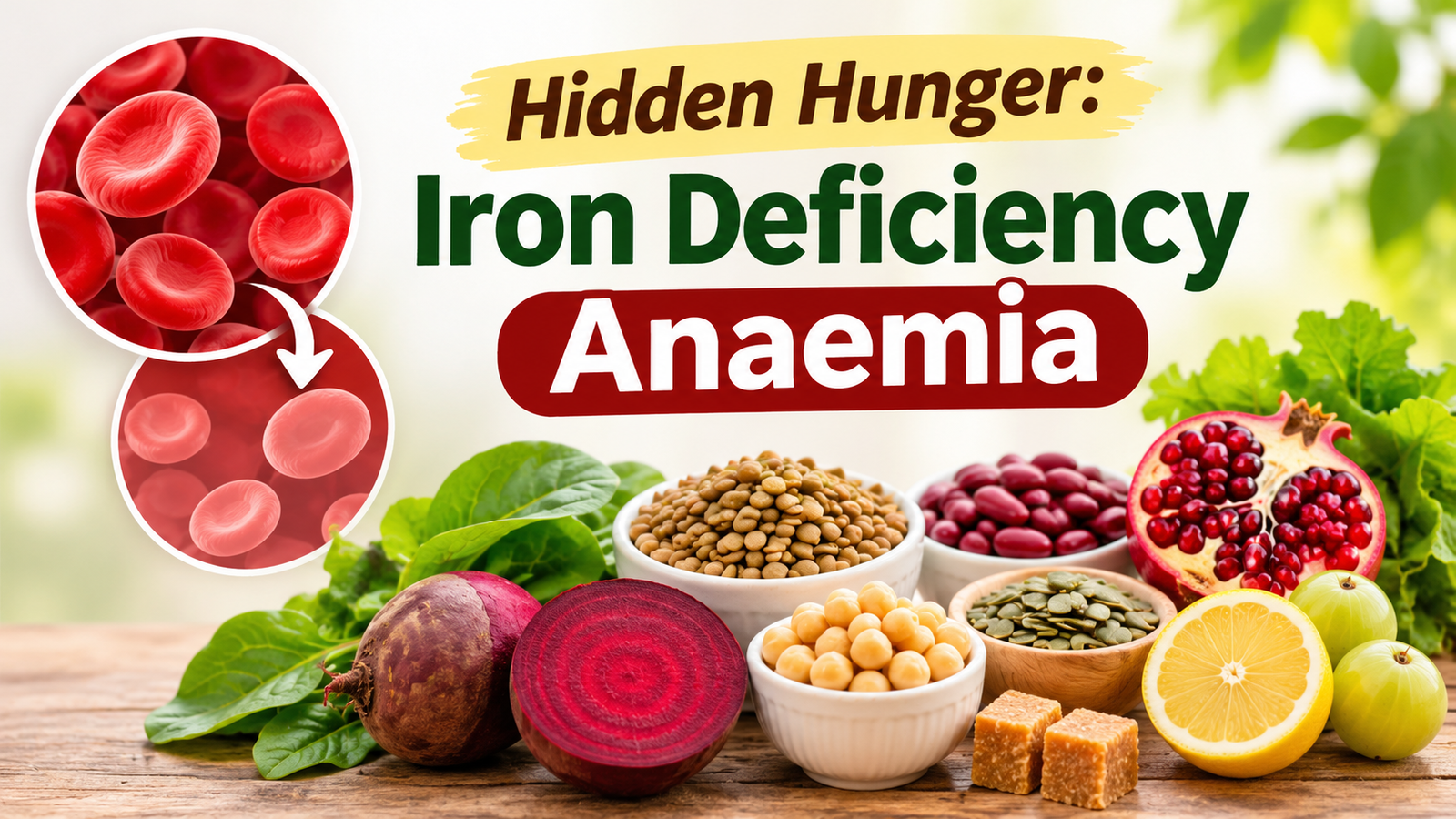
Anemia (Raktalpta) remains a major public-health concern, affecting physical, mental, and social well-being. The National Family Health Survey (NFHS-5, 2019-21) reported that 57.0% of Indian women aged 15-49 years were anemic, compared with 53.0% in NFHS-4 (2015-16). This indicates a substantial public-health challenge that requires attention beyond routine dietary advice.
Globally, the World Health Organization (WHO) estimates that approximately 30% of non-pregnant women and 37% of pregnant women aged 15-49 years were affected by anemia in 2019.
Anemia is frequently associated with inadequate iron intake, but its causes are more complex. Low dietary diversity, poor absorption of non-heme iron, menstrual blood loss, repeated pregnancies, infections, inflammation, and socioeconomic inequalities can interact to increase vulnerability.
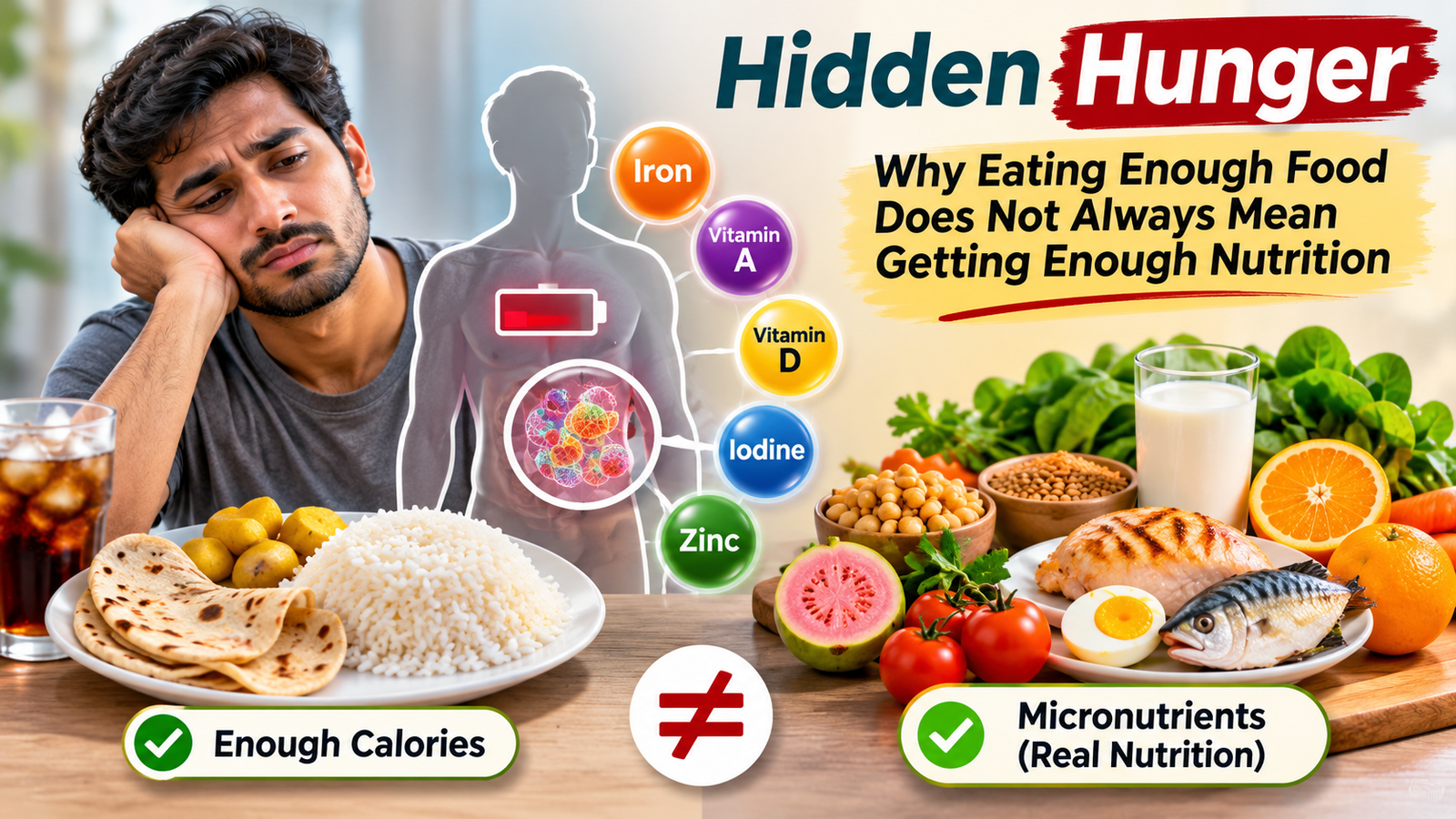
The term hidden hunger describes inadequate intake or availability of essential micronutrients even when energy intake may appear sufficient. Iron deficiency is an important example.
Addressing it requires a combination of dietary improvement, timely diagnosis, appropriate treatment and public-health interventions.
This article examines the relationship between iron deficiency and anemia, the biological mechanisms regulating iron absorption, dietary and non-dietary risk factors, diagnostic approaches and evidence-based dietary strategies. It also discusses national initiatives, particularly Anemia Mukt Bharat, and highlights the need for integrated approaches involving nutrition education, screening, appropriate treatment and improvements in health services.
Understanding Anemia
Anemia is a condition in which hemoglobin concentration is below the expected level for an individual's age, gender, and physiological status.
Hemoglobin (Hb) is an iron-containing protein present in red blood cells that transports oxygen from the lungs to body tissues.
Table 1 indicates the classification of anemia according to the World Health Organization (WHO).
Table 1: Hemoglobin (Hb) classification of anemia according to WHO⁵
| Population | Non-Anemic | Mild Anemic | Moderate Anemic | Severe Anemic |
|---|---|---|---|---|
| Pregnant women | ≥11.0 g/dL | 10.0-10.9 g/dL | 7.0-9.9 g/dL | <7.0 g/dL |
| Non-pregnant women | ≥12.0 g/dL | 11.0-11.9 g/dL | 8.0-10.9 g/dL | <8.0 g/dL |
Iron deficiency is a major nutritional cause of anemia, but not every person with anemia has iron deficiency.
There can be other reasons, as mentioned in Table 2, and this distinction is important because treatment must address the underlying root cause rather than relying on iron supplementation in every case.
Table 2: Causes of anemia
| Category | Examples |
|---|---|
| Nutritional deficiency | Iron, Vitamin B9, Vitamin B12 |
| Blood loss | Excessive menstrual bleeding, gastrointestinal bleeding |
| Increased blood cell destruction | Hemolytic anemia |
| Reduced RBC production | Kidney disease, bone marrow disease |
| Inherited conditions | Thalassemia, hemoglobin disorders |
Iron Deficiency Anemia
Iron Deficiency Anemia (IDA) is a condition that develops when the body's iron stores become insufficient to produce adequate hemoglobin, resulting in reduced oxygen-carrying capacity of the blood.
Common causes include inadequate dietary iron intake, poor iron absorption, heavy menstrual bleeding, pregnancy-related demands, and chronic blood loss.
Recognizing Anemia: Signs and Symptoms
Iron deficiency anemia (IDA) may present with varying symptoms depending on its severity, ranging from mild fatigue, weakness and dizziness to persistent breathlessness, pallor, palpitations and, in severe cases, fainting or chest discomfort.
However, symptoms alone cannot determine severity; haemoglobin levels and clinical assessment are essential.
Other characteristic signs include:
Pica: Craving ice or non-food substances.
Koilonychia: Spoon-shaped nails.
Hair thinning or increased hair shedding.
Blood Investigations: How Is Iron Deficiency Identified?
Accurate diagnosis is essential to distinguish iron-deficiency anemia from other causes of low hemoglobin, as explained in Tables 3 to 5.
Table 3: Complete Blood Count (CBC)
| Parameter | What it indicates | Clinical significance |
|---|---|---|
| Hemoglobin (Hb) | Hemoglobin concentration in blood | Helps identify and assess anemia. |
| Red Blood Cell (RBC) count | Number of red blood cells | Helps assess red blood cell production. |
| MCV | Average size of red blood cells | Helps classify anemia as microcytic, normocytic, or macrocytic. |
| MCH | Average amount of hemoglobin per red blood cell | Often reduced in iron deficiency. |
| MCHC | Average hemoglobin concentration within red blood cells | May be reduced in iron-deficiency anemia. |
| RDW | Variation in red blood cell size | Often increased in iron deficiency due to variation in cell size. |
Table 4: Iron Profile
| Investigation | What it measures | Interpretation in iron deficiency |
|---|---|---|
| Serum ferritin | Stored iron in the body | Usually decreased; a low value strongly supports iron deficiency. |
| Serum iron | Circulating iron in blood | Usually decreased, but varies with time of day, food intake, and inflammation. |
| Total Iron-Binding Capacity (TIBC) | Blood's capacity to bind and transport iron | Usually increased. |
| Transferrin Saturation (TSAT) | Percentage of transferrin carrying iron | Usually decreased. |
Table 5: Additional Investigations
| Investigation | Purpose |
|---|---|
| Vitamin B12 | Identifies vitamin B12 deficiency, which can cause anemia. |
| Folate | Detects folate deficiency affecting red blood cell formation. |
| C-reactive protein (CRP) | Helps identify inflammation that may affect ferritin interpretation. |
| Menstrual history and evaluation | Helps identify excessive menstrual blood loss. |
| Gastrointestinal evaluation | Investigates possible chronic blood loss or impaired iron absorption. |
| Infection and parasite screening | Identifies infections or parasitic diseases that may contribute to anemia. |
| Haemoglobinopathy screening | Helps identify inherited conditions such as thalassemia when indicated. |
Anemia of Chronic Disease
Iron absorption and distribution are regulated by a hormone called hepcidin, which is primarily produced by the liver.
It controls the activity of ferroportin, a protein responsible for transporting iron from intestinal cells and iron-recycling cells into the bloodstream.
During infection or inflammation, inflammatory signals, particularly interleukin-6 (IL-6), can increase hepcidin production.
Figure 1: Hepcidin-Mediated Mechanism

Dietary and Non-Dietary Determinants of IDA
IDA can be caused by dietary and non-dietary factors, as mentioned in Figure 2.
The main reason behind iron deficiency anemia is an imbalance between iron intake, absorption, increased physiological requirements, and iron loss.
Poor dietary diversity, inadequate iron-rich foods, excessive tea consumption and low vitamin C intake reduce iron availability and absorption.
Meanwhile, menstruation, pregnancy and frequent childbirth increase iron requirements or losses.
Poverty, lack of education, poor sanitation and recurrent infections further contribute by limiting access to nutritious food, healthcare and timely treatment.
Figure 2: Dietary and Non-Dietary Determinants of IDA

Iron: Heme and Non-Heme Sources
Dietary iron occurs in two principal forms: heme iron and non-heme iron.
Heme Iron
Heme iron is primarily found in animal-derived foods such as meat, fish, and poultry. It is generally absorbed more efficiently and is less affected by other dietary components than non-hem iron.
Non-Heme Iron
Non-heme iron is present in plant-based foods and is more sensitive to dietary enhancers and inhibitors than heme iron.
Therefore, a scientific combination of nutrients is required for increasing the absorption of non-heme iron, as explained in Figure 3.
Figure 3: Importance of Vitamin C with Non-Heme Iron

Beyond Iron: Nutrients Essential for Healthy Blood Formation
Although iron plays a central role in hemoglobin synthesis, normal red blood cell production also depends on several other nutrients.
Protein: Provides the amino acids required for globin synthesis.
Vitamin C: Enhances non-heme iron absorption.
Folate (Vitamin B9): Supports DNA synthesis and cell division.
Vitamin B12: Essential for normal red blood cell maturation.
Vitamin A: Contributes to iron metabolism and healthy blood cell production.
Dietary Inhibitors of Iron Absorption and Ways to Reduce Their Effects
Certain dietary components, such as tannins in tea and coffee, and phytates in cereals, legumes, nuts and seeds, can reduce non-heme iron absorption.
Maintaining a 1-2-hour gap between meals and tea or coffee, along with traditional preparation methods such as soaking, sprouting, fermentation and proper cooking, can help improve iron bioavailability and reduce anti-nutritional factors.
Calcium may temporarily interfere with iron absorption when consumed together; therefore, individuals taking iron supplements may need to separate them from calcium supplements as advised by a healthcare professional.
However, routinely restricting calcium-rich foods is not necessary.
Additionally, Vitamin C is a heat-sensitive and water-soluble vitamin; therefore, excessive cooking should be avoided.
Steaming and microwaving retain higher concentrations of vitamin C than boiling because of the reduced contact with water at relatively low temperatures.
Using minimal cooking water and cooking for shorter time periods should result in higher vitamin C retention.
Myth Versus Fact
1. Myth: All anemia is caused by iron deficiency.
Fact: Anemia can also result from vitamin B12 or folate (B9) deficiency, blood loss, chronic infections, and inherited blood disorders.
2. Myth: Lemon can cure anemia.
Fact: Lemon provides vitamin C, which improves non-heme iron absorption, but it is not a primary treatment for anemia.
3. Myth: Iron tablets are harmful to health.
Fact: Iron supplements are highly beneficial when prescribed under healthcare supervision. Excessive or unnecessary intake can be harmful.
4. Myth: Low serum iron always confirms iron deficiency anemia.
Fact: Iron status requires interpretation of multiple parameters. Inflammation can cause low serum iron with normal or increased ferritin due to hepcidin-mediated iron sequestration.
5. Myth: Food alone can cure all stages of anemia.
Fact: A balanced, iron-rich diet supports prevention and recovery, but in certain stages and conditions, supplementation is required. Severe anemia may require urgent medical intervention.
6. Myth: Only non-vegetarians can meet their iron requirements.
Fact: Vegetarians can obtain iron from pulses, legumes, green leafy vegetables, millets, nuts and seeds. Combining these with vitamin C improves absorption and emphasizes bioavailable iron.
7. Myth: Iron deficiency anemia affects only women.
Fact: It can affect people of all age groups, including infants, children, adolescents, men and women, although certain groups have higher risks.
India's Public-Health Response: Anemia Mukt Bharat
Launched in 2018, Anemia Mukt Bharat (AMB) 7 * 7 * 7 Framework (Figure 4) aims to reduce anemia through a life-cycle approach, targeting six groups:
Children (6-59 months).
Children (5-9 years).
Adolescents (10-19 years).
Pregnant women.
Lactating women.
Women of reproductive age.
Its key interventions include iron-folic acid supplementation, deworming, anemia screening and treatment, nutrition education, behaviour-change communication, and management of infections and other causes.
POSHAN Abhiyaan further supports nutrition awareness and maternal and child health.

Conclusion
Iron deficiency anemia can affect physical capacity, cognition, and quality of life.
Early diagnosis, timely blood investigations and appropriate treatment under healthcare supervision are essential. Avoid self-medication and unnecessary supplements.
Emphasize dietary diversity, adequate iron bioavailability, vitamin C combinations and addressing both dietary and non-dietary determinants for effective prevention and management.
Always seek guidance from qualified healthcare professionals, such as a dietitian for dietary advice and a medical doctor for diagnosis and treatment, to ensure safe and appropriate care.
References
International Institute for Population Sciences (IIPS) and Ministry of Health and Family Welfare, Government of India. (2017). National Family Health Survey (NFHS-4), 2015–16: India.
International Institute for Population Sciences (IIPS) and Ministry of Health and Family Welfare, Government of India. (2021). National Family Health Survey (NFHS-5), 2019–21: India.
World Health Organization. Anaemia, 2025. Available at: https://www.who.int/news-room/fact-sheets/detail/anaemia
Mehta, K. (2026). Prevalence and determinants of anaemia among women of reproductive age in India: a narrative review. International Journal of Community Medicine and Public Health, 13(10), 6213-6218. https://doi.org/10.18203/2394-6040.ijcmph20263666
El Brihi J, Pathak S. Normal and abnormal complete blood count with differential. In: StatPearls [Internet]. Treasure Island (FL): StatPearls Publishing; 2026 Jan-. Available at: https://www.ncbi.nlm.nih.gov/books/NBK604207/table/article-161108.table0/
Nemeth, E., & Ganz, T. (2023). Hepcidin and iron in health and disease. Annual Review of Medicine, 74, 261-277. https://doi.org/10.1146/annurev-med-043021-032816
Hallberg, L., Brune, M., & Rossander-Hulthén, L. (1987). Is there a physiological role of vitamin C in iron absorption? Annals of the New York Academy of Sciences, 498, 324–332. https://doi.org/10.1111/j.1749-6632.1987.tb23771.x
Lee, S., Choi, Y., Jeong, H. S., Lee, J., & Sung, J. (2018). Effect of different cooking methods on the content of vitamins and true retention in selected vegetables. Food Science and Biotechnology, 27, 333-342. https://doi.org/10.1007/s10068-017-0281-1
Ministry of Health and Family Welfare, Government of India. (2026, August 11). Implementation of Anemia Mukt Bharat Abhiyaan operational guidelines. Press Information Bureau. https://www.pib.gov.in/PressReleasePage.aspx?PRID=2297512®=48&lang=1
💬 Comments (0)
Be respectful. Website links and phone numbers are not allowed.